• About
  • Past Laureates
  • Blog
  • Events
  • Resources
  • Contact Us

Piedmont Laureate

~ Promoting awareness and heightened appreciation for excellence in the literary arts throughout the Piedmont Region

Piedmont Laureate

Category Archives: Uncategorized

Art and Poetry Treasure Hunts: Write Your Own Ekphrastic Poems

12 Wednesday Apr 2017

Posted by Mimi Herman in Ekphrasis, Genres, Mimi Herman, Open Mic, Poetry, Reading, Uncategorized, Writing Advice

≈ 3 Comments

Happy National Poetry Month! Here’s wishing you a month of inspiration and a year of writing, reading and listening to poetry.

For a chance to write your own poems and read them at an open mic event, join us on one of the Friday Night Art Walks for an Art & Poetry Treasure Hunt this April or May. We’ll eavesdrop on what other people are saying in galleries, write love letters from one piece of art to another and take journeys inside of paintings and photographs to discover what it’s like to live inside a piece of art.

Here are the details:

Art & Poetry Treasure Hunts

Dates and Locations
Friday, April 14, 2017 — The ArtsCenter, 300 G East Main Street, Carrboro, NC 27510
Friday, May 5, 2017 — United Arts Council, 410 Glenwood Avenue, Suite 170
Raleigh, NC 27603
Friday, May 26 — Margaret Lane Gallery, 121 W. Margaret Lane, Hillsborough, NC 27278

Schedule
6:00 to 7:30 pm — Art & Poetry Treasure Hunt
Drop by the galleries above during this time to pick up your treasure map, notepad and pen, and the secret directions to create your poems.

8:00 to 9:00 pm — Open Mic Reading
Return to the gallery to read some of the poems you’ve created in your gallery wanderings.

*   *   *

Ekphrasis. It sounds like something that calls for a heavy dose of antibiotics, doesn’t it? Actually, it’s just a fancy Greek word for poetry about art, though it may well become contagious this April and May on the Friday night art walks in Chapel Hill/Carrboro, Raleigh and Hillsborough.

As you might imagine, poets have been writing about art for a good long time. It started with Homer painting a word picture of Achilles’ shield in the Iliad. Later, Plato went on to describe the “bedness” of a bed in The Republic, and Socrates had a chat with Phaedrus about writing and painting:

“You know, Phaedrus, that is the strange thing about writing, which makes it truly correspond to painting.
The painter’s products stand before us as though they were alive,
but if you question them, they maintain a most majestic silence.
It is the same with written words; they seem to talk
to you as if they were intelligent, but if you ask them anything
about what they say, from a desire to be instructed,
they go on telling you just the same thing forever.

Plato, Phaedrus 275d
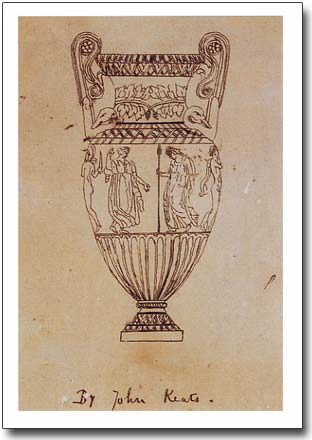
Sosobios_Vase

Long before the Internet, before we could even create reproductions of art in books and on posters, ekphrastic poems offered art lovers a virtual museum, where they could “see” art from the comfort of their own armchairs. In the Italian Renaissance, Ekphrasis became popular again, and in 1819, John Keats wrote one of the most famous ekphrastic poems in history, “Ode on a Grecian Urn,” which you can find here, at The Poetry Foundation website.


http://www.keats-shelley-house.org/en/shop/postcards

In more recent times, W. H. Auden described Bruegel’s painting, Landscape with the Fall of Icarus in this ekphrastic poem:

Musee des Beaux Art
W. H. Auden

About suffering they were never wrong,
The old Masters: how well they understood
Its human position: how it takes place
While someone else is eating or opening a window or just walking dully along;
How, when the aged are reverently, passionately waiting
For the miraculous birth, there always must be
Children who did not specially want it to happen, skating
On a pond at the edge of the wood:
They never forgot
That even the dreadful martyrdom must run its course
Anyhow in a corner, some untidy spot
Where the dogs go on with their doggy life and the torturer’s horse
Scratches its innocent behind on a tree.

In Breughel’s Icarus, for instance: how everything turns away
Quite leisurely from the disaster; the ploughman may
Have heard the splash, the forsaken cry,
But for him it was not an important failure; the sun shone
As it had to on the white legs disappearing into the green
Water, and the expensive delicate ship that must have seen
Something amazing, a boy falling out of the sky,
Had somewhere to get to and sailed calmly on.

http://english.emory.edu/classes/paintings&poems/auden.html

icarus

In 1960, William Carlos Williams had his own take on the same painting:

Landscape with the Fall of Icarus

William Carlos Williams

According to Brueghel
when Icarus fell
it was spring

a farmer was ploughing
his field

the whole pageantry

of the year was
awake tingling
with itself

sweating in the sun
that melted
the wings’ wax

unsignificantly
off the coast
there was

a splash quite unnoticed
this was
Icarus drowning

from http://english.emory.edu/classes/paintings&poems/williams.html

You can discover links to more ekphrastic poems here and here.

I hope you’ll join us for one or all of the Art and Poetry Treasure Hunts, where you’ll be inspired by local art to write your own ekphrastic poems. Whether you’ve been writing poems all your life, or your poetry career came to an abrupt halt at “Roses are red,” we’d love to have you. Bring your family. All ages are welcome.

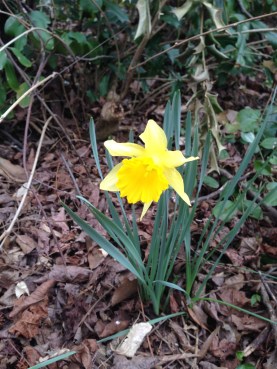
Twitter Haiku Writing Challenge and Free Poetry Party at Duke Gardens!

28 Tuesday Mar 2017

Posted by Mimi Herman in Mimi Herman, Poetry, Uncategorized, Writing Advice

≈ Leave a comment

Tags

duke gardens, haikai no renga, haiku, upcoming events

Writing haiku, like riding a bicycle, is one of those things you never forget. Even if you’re a few years out of elementary school, you probably remember how it goes: three lines, with five syllables in the first line, seven syllables in the second line, and five syllables in the third.

Here’s a haiku by Matsuo Basho, a famous Japanese poet who lived from 1644 to 1694. Note: this is a poem in translation, so in English it doesn’t exactly follow the 5-7-5 syllable format.

27176352086_69eb6a0e42_z

from https://www.flickr.com/photos/131326857@N03/27176352086/in/photostream/

Over the next few weeks, I invite you to haul out your haiku skills from the garage of your brain and take them for a spin on Twitter. Here’s all you have to do:

  1. Go to @PiedLaureate.
  2. Check out the most recent haiku you see there.
  3. Write your own haiku that follows naturally from the one before it. Use 5 syllables in the first line, 7 syllables in the second line and 5 in the third.
  4. Feel free to be funny. There’s no rule saying all haiku have to be serious.
  5. Let’s see how many haiku we can create! You’re welcome to add as many as you like.

Then on Saturday, April 8th, you’re invited to join me at a free Poetry Party at Duke Gardens from 10:30 am to 12:00 noon, where we’ll leave the training wheels of Twitter behind and write poems together in person.

You don’t have to be a poet to come — or even to have added a haiku to our Twitterku (though I hope you will). Just come out and enjoy writing poetry in the beautiful Duke Gardens in springtime.All ages and writing abilities are welcome! Bring your family and friends!

For those of you like to know how things get started, haiku began in medieval Japan, when poets would travel miles to meet for a poetry party of their own. Once the party started, one poet would compose the first stanza, known as the hokku, in honor of the host, making a reference to whatever season it happened to be. The host would then write the next stanza, responding to the first one, and from there on out, everyone would get to take turns writing stanzas for the haikai no renga, or “linked verse,” alternating stanzas of 5-7-5 syllable stanzas with 7-7 syllable stanzas until they’d reached a hundred stanzas altogether. And, just to make the party more fun, they made up rules about when you could mention the moon, or flowers, or each season or…love. That first verse, the hokku, eventually became a poem by itself, a haiku. 

If you really want to geek out on haikai no renga, here’s a great article: http://simplyhaiku.com/SHv5n1/features/Arntzen.html. And here’s another one, with the rules we’ll be using for our Poetry Party: http://www.ahapoetry.com/Bare%20Bones/RBless6.html

So take up the Twitterku challenge and join me in writing your own haiku on Twitter, then bring your fabulous haiku writing skills to Duke Gardens on the morning of April 8th for our Poetry Party!

Piedmont Laureate Twitterku Challenge: @PiedLaureate.

Poetry Party at Duke Gardens
Date: Saturday, April 8, 2017
Time: 10:30 am to 12:00 noon
Location: Meet at the Doris Duke Center to be escorted to the poetry party


Piedmont Laureate Coming Attractions

15 Wednesday Mar 2017

Posted by Mimi Herman in Mimi Herman, Poetry, Uncategorized

≈ Leave a comment

Tags

upcoming events

 
IMG_4614It hasn’t been much of a winter, despite a couple of good days when I got to break out my yard sale cross-country skis and tour the snowy neighborhood, doing my best to stay upright and make forward progress at the same time. So when we achieved bathing suit temperatures last week, I felt guilty. How could we be getting spring so soon, when we hadn’t even endured winter yet? Surely we didn’t deserve such beautiful weather. Maybe this weather was being given to those of us who believe in global warming so we could say, “See, it really is true.”
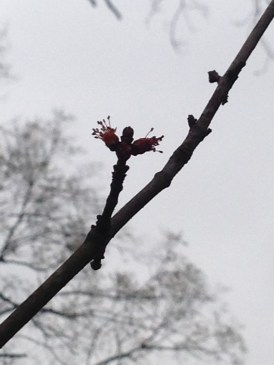
But as someone who needs lots of light to stay upright and make forward progress, the sunlight and warmth came as a welcome gift, and got me even more excited about some of the events I’m planning as Piedmont Laureate. Now that the temperatures have dipped a bit again, here are a few tidbits about upcoming events to keep you going until the next warm spell.

In the upcoming months, I’ll be holding an Art Poetry Treasure Hunt at each of the Friday Art Walks, followed by an open mic reading to share the poems you’ve written. The first one will occur at Second Friday on April 14th in Chapel Hill and Carrboro, where you’ll receive your own treasure map of art galleries, a pad of paper to carry with you as you explore those galleries, and a variety of ways to write poetry. Then we’ll all gather to read the marvelous poems you’ve created on your art adventure.

IMG_4645

On April 8th, from 1:00 to 2:30, I invite you to join me at a Poetry Party in Duke Gardens to celebrate spring. In ancient Japan, poets traveled miles for poetry parties. We’ll travel to the Culberson Asiatic Arboretum for our inspiration and collaborate to write a 100-stanza Haikai no Renga style of poem, considered the origin of modern haiku. No poetry experience or knowledge of Japanese needed, just the desire to enjoy nature and beauty in great company. All ages and writing abilities welcome! We’ll meet at the Doris Duke Center to be escorted to the poetry party. In my next blog post, on March 29th, I’ll tell you more about Haikai no Renga, and you can start practicing with Twitter haiku.

Over the next few months, I’ll be offering various free workshops at libraries throughout Orange, Wake and Durham counties, with subject ranging from “Innovative Approaches to Revision” to “The Geography of Your Life” (where you’ll create three-dimensional maps of your life) to “Flirting with Your Reader.”

Then, keep looking ahead to autumn, when I’ll team up with the amazing educators from the North Carolina Museum of Natural Sciences for a paddle and science poetry tour, so you can exercise your body while you strengthen your powers of observation.

mim-kayak-on-the-river-2016 copy

Keep your eye on the Piedmont Laureate Events page for details on these events and more as they develop. I look forward to seeing you soon!


The Joy of Unspoiled Voices

13 Sunday Nov 2016

Posted by Katy in Katy Munger, Uncategorized

≈ Leave a comment

by Katy Munger, 2016 Piedmont Laureate

One of the great joys of working with young authors is that their voices have yet to be shaped by disappointment, cynicism, or the expectations of strangers. Their imaginations are still on overdrive, unsquelched by the weight of everyday responsibilities, and they give voice to their imaginations with a delightful and unadorned boldness.

I was reminded of this over the past month as I read through the submissions of a young writers contest the Piedmont Laureate program sponsored at www.summersleuths.org. The assignment was to write a mystery or crime fiction short story and a few prompts were provided to get kids thinking. But most of the authors opted to submit stories based on their ideas. I was blown away by their creativity as well as the quality of their writing.

Sometimes the subjects were familiar: being late for school, moving to a new town, or the usual fears of childhood like fitting in or losing a pet. But they approached these topics with such elan and a cheerful enthusiasm for catching the bad guys that real law enforcement can only hope to emulate. Bus drivers, little old ladies, jealous friends, and others became villains, but many of the authors pointed out that, at heart, these villains still had good in them. Just as often, they would write about a situation where they were afraid of something, only to reveal later that they had simply misinterpreted what was going on. I love this view of the world: that no one is all bad and that we all have the resilience to overcome our fears. We just have to adjust the way we look at them.

Nearly all of the young writers excelled at creating a mood in their stories. One atmospheric submission spoke of monsters outside the window, describing a gradual increase of fear with a sparse, moody elegance I greatly admired. Other stories captured the loneliness that comes with being new to a classroom or town, or the loving interplay between child and parent. Are you wondering whether kids really hear what you say to them? Wonder no more: their ear for dialogue is astonishing.

These are kids who are paying attention to the world. These are young authors who are learning from what they see. ­­I would take nine billion of them.

Some stories were concise, others ran on and on -– leaping into different time periods and new worlds with endless energy and unpredictable creativity. May every page I write have that much joie de vivre. We could all use a little excess.

One young man even wrote a beautiful homage to British police procedurals; I wanted to call up his parents and salute them on their television watching policies. He captured the loneliness of responsibility that comes with being a senior detective who makes the decisions, the aching fear of making the wrong decision, and the price that comes with making a mistake. Somehow, this young man conveyed the essence of many a PBS series and he’s just 11 years old. Well done. He’s not just observing the world, he is absorbing it.

And unlike adults, faced with a crime, these young writers were not so concerned with dispensing justice. Bad guys might be captured, but they weren’t necessarily punished. There was little need for retribution. I rather liked this relaxed approach to good and evil. It signified a belief in the universe and its own ability to balance good and evil that I would like to embrace.

Most of all, I came away impressed with the power that stories have on our lives. These are young people raised on narratives everywhere they look, from the television commercials they see to the subjects they are taught in school, to the endless parade of books, movies, and shows that have shaped their lives. This consumption of stories has clearly made them storytellers — the advanced structures of these stories show this clearly. That gave me hope and underscored my belief that, going forward, in a world of sound bites, it will be shared stories that bind us.

Examining the Future of Books

02 Monday May 2016

Posted by Katy in Katy Munger, Uncategorized

≈ Leave a comment

by Katy Munger, 2016 Piedmont Laureate

Part 1

This is the first in a series of blog posts adapted from a keynote speech I made at the Cameron Village Library on April 26th as part of their Backyard Authors event. Over the next two weeks, I will publish additional posts addressing the future of libraries, readers, and writers.

For the last twenty years, I have lived on the very frontline of traditional and social media and been a firsthand witness to a volatile information landscape. At the same time, I have been living the life of a writer and experiencing firsthand the challenges that publishers, bookstores, and libraries face in this dramatically changing environment.

As I have watched these worlds from a birds-eye view, I have grown increasingly fascinated with the question of exactly what role books will play in our society in the years ahead. And even as I have come to believe that authors, books, and libraries have never been needed more than they are needed now, I have also had to reluctantly acknowledge that the future of books is far from assured. I believe it is time for an epic and national conversation about how we can build a future for ourselves as writers and readers and not simply take what comes. I hope that you will be a part of it by commenting on this blog series in the weeks to come.

Let me begin by saying that we live in an absolutely transformational time for the written word. The very way we communicate with one another, entertain ourselves, absorb information, and process it in our brains is undergoing an amazing overhaul. Take a look at some of the forces emerging in the last 20 years:

  • People raised on television and motion pictures have come of age and replaced older generations of readers, bringing with them attention spans and expectations for plotting, pacing, structure, and characterization that are very different from days gone by. As a writer, if you ignore these changes, you risk failing to attract reader attention at all.
  • Media outlets and publishing companies have consolidated into worldwide behemoths that can no longer afford to put taste, quality, or vision before profits. With these big publishers, it’s all about sales now, period. Literally, and literarily, nothing else matters. Sure, commercial concerns have always dominated publishing and it’s never been easy to be a writer. But today is different. Is a book well written? It doesn’t matter. Does it have something new to say or does it say it in a different way? It doesn’t matter. What matters when it comes to big publishers is if it has a celebrity or television/movie tie-in, or if it can be built into a franchise that sells no matter what is between the covers. Thank god for small publishers.
  • The rise of social media—and the commercial or partisan information sources that thrive on social media by masquerading as objective—have encouraged a disingenuous, anonymous, narcissistic mindset among many people, leading to a disregard for accuracy, a belief that the truth is a matter of opinion, and frightening polarization between people, all while creating a platform where fear is the motivating factor and ridicule of others accepted. How can we expect our society to respect different voices under such circumstances—and isn’t the world of writing fundamentally based on an acknowledgement of and respect of different voices? Isn’t that what writing is? This is not a situation that writers should simply accept if you want a future. It’s time to start calling out inaccurate, self-interested news sources. Stop sharing them on social media, and educate others on how to spot them.
  • The rise of new outlets like blogs, ebooks, print-on-demand, and other technologies now allow anyone to be a writer and publish a book or be heard. In many ways, these tools could become our best friends. They could form the foundation for saving the world of writers and books. But right now: they are contributing to massive information overload and creating reader fatigue that threatens us all. For example, how in the world can readers find good books, well-written books, original books, in the mountain of ebooks published every day? This is a question we must address or else more and more readers (and critics) will simply give up. If you want a future for books, we must all police quality and help the good ones come to the attention of readers—even if it’s not yourbook.
  • Knowledge and intellect have become reclassified by politicians as something to ridicule, as a wedge to drive between people, and as an excuse to justify cutting funding to libraries—the last public bastion of civilization and intellect for our communities beyond our universities. No, our country should not take pride in being stubbornly illiterate, anti-intellectual, and sometimes downright stupid. We must protect the knowledge that books represent by protecting the role libraries play in our communities.
  • The messages we receive in this kind of information environment have become so black-and-white, so invested with self-interest, and so crisis-oriented that satire, irony, and nuance are dead—people are literally incapable of recognizing it. Yet satire, irony, and nuance have all been fundamental tools of writers for centuries. If they no longer work with the majority of people in our society today, what tools can we use to force people to look at themselves in the mirror? Writers must answer this question or risk irrelevance.

As I look at these and other forces, and see people’s fundamental cognitive behavior changing in response to them, I find myself wondering:

  • What is going to happen to our libraries in the years ahead?
  • Will our world even have the attention span and desire to support books in the future?
  • How will writers fit into this new world order? How can we protect our power and our rightful role in modern society?

My next post will be about the future of libraries, coming later this week. In the meantime, please post your thoughts on these questions below!

The Mind of a Mystery Writer

18 Monday Apr 2016

Posted by Katy in Katy Munger, Uncategorized

≈ Leave a comment

by Katy Munger, 2016 Piedmont Laureate

One of the most frequent questions I get at readings and workshops is “Where do you get your ideas?” Although, as a crime fiction writer, I suspect what this question really means is, “You seem like such a nice person—how is it you are capable of coming up with so much murder and mayhem?” Alas, I suspect the answer to that question is much scarier than any plot I could come up with: it’s just the way my brain works. All the time. And I am not alone.

All mystery writers are secret criminal masterminds whose imaginations are constantly on the prowl for two things: 1) how to break the rules and get away with it, and 2) how to catch and punish those who do break the rules. Perhaps you may wonder which of these impulses drives us the most. Are mystery writers, at heart, megalomaniacs who enjoy breaking the polite rules of society through our characters? Or are we simply obedient members of society, superheroes with pens, who are always on the lookout for the bad guys and keen to bring them to justice?

Well, don’t waste too much time pondering the possibilities, because I’m here to tell you: all mystery writers are, at heart, rule breakers chafing under the yoke of societal expectations, even the plump, kindly-looking writers with white hair and apple cheeks. In fact, they’re the worst. Which is why our minds race about and land on the darnedest ideas whenever we get invited anywhere. Put us in a group of people and we will immediately default to amateur psychologist status, analyzing everyone we meet, soon followed by diabolical plotting in our heads.

To prove my point—and at the risk of never being invited anywhere ever again—I thought it might be fun to give you an example of what I mean, with deepest apologies to those who were there with me at the time and thought I was normal… I recently attended my high school reunion. As I entered the room, I immediately saw a friend I not had seen in years, followed by another, and still another. Soon, I was deep in conversations, laughter, wonderful memories and yet… all the while, my mind was imagining scenarios to connect the dots between the teens I had known so many years ago and the adults now standing before me. The actual life stories of my classmates were interesting enough, but the imagined lives I ascribed to them? Even better. And then I discovered the memorial table. This was a simple table holding photos of classmates who had passed on. Depending on the photo, they were forever frozen in our memories at a single age, most of them while still in high school. As I circled the table, mourning their absence at the reunion, I tried to cope with the sheer number of photos on that table, unwilling to accept that I was getting older and death a more frequent visitor to my life. So where did my mystery writer mind go in defense? To the thought that the memorial table was not simply a reminder that life was passing, and passing quite quickly, but that it had all been planned.

“What if,” I thought, “We had a classmate, someone who had been quirky and an outcast in school, someone obsessed with mathematics and patterns, someone who would have been labeled as autistic or on the spectrum today? What if he had showed up at the reunion and, like me, circled the table, peering at photos, trying to make sense of it all? And what if he had suddenly started mumbling letters, softly chanting “A, C, D, F….” then looked up in alarm, scanning the room, having discovered a pattern in the names of those whose photos appeared on the table? What if he, and he alone, had discovered that there was a killer among us—and knew who was likely to be the next victim?”

With that thought, the game was afoot. Everyone I looked at became an imagined hero or villain in this mental tale of mine. The mild-mannered girl whose name no one could quite remember? She was Carrie incarnate, out for revenge. The aging football player who had gone through four wives? He mourned his lost glory and was systematically taking out old classmates for the sheer thrill of the game again. And that former cheerleader who had spent a lifetime being a wife and a mom? She had witnessed something that told her the football player, her former high school boyfriend, was a killer and she was now secretly tracking his movements, biding her time, ready to dispatch of him quietly when no one else was looking. Maybe even tonight….

It’s insanity really. But a most enjoyable kind. Social gatherings are way more fun when you’ve got two versions of them going at the same time. Eventually I came back to reality, and to real life, and had a great night talking, dancing, and laughing. Nonetheless, sleeping somewhere in my mystery writer imagination, now lies the bones of a new plot and a cast of characters I might one day awake and command to do my bidding. In the meantime? I’m just trying to stay off the memorial table.

So the next time you find yourself at a cocktail party with a mystery writer and you catch them peering at you with an inscrutable expression—hey, don’t worry about it. They’re either killing you off, making you into a nefarious villain, or assessing you for possible hero status. No big deal, really. We do it all the time. And you know why? Because we can.

Newer posts →

About our laureates

  • Past Laureates

Join Us on Facebook

Join Us on Facebook

Enter your email address to subscribe to this blog and receive notifications of new posts by email.

Join 174 other subscribers

Piedmont Laureate Sponsors

Raleigh Artsuac-logo

Search

Website Powered by WordPress.com.

  • Subscribe Subscribed
    • Piedmont Laureate
    • Join 174 other subscribers
    • Already have a WordPress.com account? Log in now.
    • Piedmont Laureate
    • Subscribe Subscribed
    • Sign up
    • Log in
    • Report this content
    • View site in Reader
    • Manage subscriptions
    • Collapse this bar

Loading Comments...