• About
  • Past Laureates
  • Blog
  • Events
  • Resources
  • Contact Us

Piedmont Laureate

~ Promoting awareness and heightened appreciation for excellence in the literary arts throughout the Piedmont Region

Piedmont Laureate

Category Archives: Uncategorized

Letter to a Stranger

31 Wednesday Oct 2018

Posted by nancystoryflow in Attention, character, communication, growing up, Observation, prompt writing, Uncategorized

≈ 4 Comments

Tags

absence, Attention, characters, death, growing up

This was written from the prompt: Write a letter to a stranger. It made me realize I miss this stranger, whom I always saw around Carrboro.

Dear Sir, I love you, and now you are gone, and I didn’t tell you I love you before you disappeared. That’s because when you were here, I did not love you. In fact, you were always annoying to me, but I miss you now, and I think I love you, and I wonder what happened, where you went and can only imagine that you have died.

The way it happened is that one day I noticed you were gone, and realized that I had not seen you for a long time. I don’t know your name, but you, sir, were  a damn good character, and Carrboro, the town we shared, has become so gentrified. There are no good characters here anymore. They can’t afford it. And so I miss you and feel love for who you were.

I miss seeing you in Harris Teeter blowing that one note on your harmonica. It was always one note. Hmmm, hmmm, hmmm, hmmm. It never varied. You never played two notes or a different note. It was like your lips were glued to the one place on the harmonica you always carried and always blew into. You never breathed in, only out, and you walked around Harris Teeter playing your one note. It used to annoy me so badly, but today… today I miss you. Perhaps I’ve grown a little.

I miss your harmonica, but even more than that, I miss your car. It was a big green car, long with a big hood and on the hood you’d glued a huge rag doll in a crucified position, and there was a bumper sticker on the back that said, “Be Patient. God Isn’t Finished With Me Yet,” and on the top, just above the driver’s door was a bunch of bananas. The bananas were always there. They were real bananas too, and they were always fresh and yellow and they weren’t glued down. People would drive up beside you and roll down their windows and point and say, “You have bananas on your car.” And you’d nod and smile and say, “I know.”

You used to run a junk shop out at the county line. It was in an old white house. I stopped in a few times. I even sold you some things. I never bought anything. There was a lot of stuff, inside and outside, and after a time the neighbors complained about your place. They said it was an eyesore, so you lined up barrels along the roadway so they wouldn’t have to see it. They complained about that too, and finally you were forced out and they tore down your house. There’s a Walmart there now, but that’s long after a series of other businesses in a series of other brick buildings. They just couldn’t get that corner right. I wonder if you cursed them.

I think now you knew more that I ever gave you credit for and I’m sorry. If I knew where your grave is, I’d go there, clear the weeds of it, maybe put a jar of wildflowers on it, maybe a harmonica.

I want you to know that I think you wouldn’t annoy me now. I think I’d be happy to see you. I’d love to hear your one-note harmonica in the aisles of Harris Teeter. I’d be happy to see your big green car gliding through the traffic of Carrboro, people staring at the crucified rag doll. I’d love to pull up behind you at a stop light and watch the person in the car next to yours roll his window down, point, and say, “You have bananas on your car.” I’d love to watch you nod and smile and say, “I know.”

Sincerely, Nancy
 

Mute

17 Wednesday Oct 2018

Posted by nancystoryflow in art, continuing, creating, creativity, emotional safety, frustration, heart, Process, safety, self, slowing down, stability, stress, Uncategorized, Working

≈ Leave a comment

Tags

art, Attention, despair, muteness, Process, stability, stress, work

How do I carry on when I feel mute?

How do I create art and to whom do I offer it?

Does art even matter anymore?

The answers are:

How do I carry on when I feel mute? I don’t know. I just do.

How do I create art and to whom do I offer it? I don’t know. I just do.

Does art even matter anymore? Yes.

The truth is, even though it seems the world is escalating and spinning out of control, even though I feel closer to the brink of street fighting and/or ecological destruction than I ever have before in my lifetime, even though I know more about my own and other’s suffering than I knew before, these have always been the answers to these particular questions.

Yes, art matters.

You don’t know how you make art or whom to offer it to, but you just do it anyway.

You don’t know how you’ll carry on, but you just do.

Stay as grounded as possible. Notice nature. Make art. Find the things and people that will help you not despair, because despair is not an option. The world needs you and your voice, and this has always been true. And will always be true. And on this you can count. This is truth. Art is a steady and stable place to stand. Artists are often known for being flaky and unstable. The truth is, we are very stable. Because we have to be.


Reading Books in the Age of Madness

02 Tuesday Oct 2018

Posted by nancystoryflow in art, Attention, competition, frustration, Reading, Uncategorized, Writer's journey

≈ 1 Comment

Tags

Attention, Money, Reading, safety, Story, stress, work

A few years ago, I sat on a public bench, waiting for a friend and reading a book. A woman interrupted me. (Please note: Do not interrupt a person reading a book!) The woman wanted to know what I was reading. I showed her the cover, and then the woman said she couldn’t read anymore. She used to read. She used to read a lot, but now she can’t. She can’t concentrate. Things have become so unstable lately, so volatile that she can’t concentrate on reading.

“Read,” I told her. “Go read a book. You’ll thank me later.”

After she left I muttered under my breath, “You think it’s hard to read in this environment? You should try writing.”

I know a lot of writers. We plug along. We ride the waves of self doubt and the waves of cultural madness. We have no choice. Being a writer, or an artist, requires a little unplugging. So we unplug. And then we plug back in. And our blood pressure goes through the roof and we unplug again. We write. It’s incredibly selfish of us. It’s incredibly hopeless. And it’s incredibly depressing as we watch the celebrity-titled books fly off the shelves while ours, and those of many authors I know, linger and gather dust.

You want to help the world be less crazy? Support the arts. Support a writer. Buy a book that does not have a flashy familiar face on the cover. And be seen reading it. And then buy another.


Hurricane

12 Wednesday Sep 2018

Posted by nancystoryflow in hurricanes, natural world, Publication, safety, slowing down, stress, Uncategorized, Working

≈ 5 Comments

Tags

natural world, safety, Story, stress

Hurricane Florence is bearing down on North Carolina. If you’re reading this you’re likely in the path of it, or at least of a part of it. We all know the drill – get food and water, gas up the car, tighten down the hatches, get ice. It sounds easy when listed like that, but it’s not. There are lines at the grocery stores and the shelves are empty, lines at the gas pump and people cutting in front of you, or bags over the pump handles, the freezer is void of bags of ice, your mind is constantly scanning for what else needs to be done.

Is the patio umbrella down? Should it be brought in? Do we need to take down the porch swing? Is there something I’ve forgotten? Something I’ve forgotten? Something I’ve forgotten? The echo goes on until it’s over. The question can never really be answered.

Twenty-two years ago Hurricane Fran hit NC and came inland. I lived in a cheap apartment in Chapel Hill in an area that was prone to flooding. My neighbors in one apartment moved out in a rush that very night, taking everything they had with them and not cleaning the apartment and digging up the irises they’d planted and taking the bulbs. I made sure I had plenty of food and cat food and candles. I put the legs of my furniture in plastic cups and hoped that if my apartment flooded it wouldn’t rise above the rims.

The hurricane came at night. Neither I nor my cat could sleep. I stood at a window (which was pretty stupid) and watched the trees whip around against the streetlights. Then the electricity went out and everything outside was dark and all I could hear was the wind. Around 2:00 a.m. there was a knock on my door. It was my neighbor Dawn. Water was coming into her apartment. We decided to vacate and see if we could stay in another friend’s place, up the hill from us. But first Dawn needed to move her car. Water was creeping into the lower parking lot. I called my friend and got the wrong number and woke someone up. I put my cat on the refrigerator and told her she could jump up there if need be (as if she needed my permission) and we walked up the hill with our flashlights to Tift’s place. Tift wasn’t home. We walked back and knocked on the second story apartment of another friend, and he said we could stay there through the night. Unbeknownst to Dawn and me there were fallen live wires all over the place during this walk. The wind had died down but it was still raining. We were lucky. It was pure dumb luck. The best kind. Sometimes I think the only kind.

The next day we returned to our apartments to assess the damage. Only a little water in Dawn’s. None in mine. My cat was fine and happy to be let out. The sky was clear. The air smelled like pine from so many snapped trees. The ground was covered in green needles and green leaves.

My first novel was published two weeks later. In the days preceding this event I was living without electricity. One day a neighbor came by to tell me there was a truck with free ice at University Mall. I got in my car and managed to snag a five-pound bag. I made rice and beans for a group of neighbors and gave candles to others. I got fired from a cleaning job because I’d mouthed off when my client complained about Duke Power taking three days to get their electricity back on. I’d said, “It’s an infrastructure. There are crews from other states up here helping us out. Maybe you haven’t noticed but there was a hurricane.”

There’s no moral to this story unless you want to read it as a cautionary tale not to mouth off to a client. But the real point is this – be patient with people. We’re all stressed out. Be patient with yourself too. After going out into the world of commerce, with varying degrees of success and failure, to get ice and gas and another cooler and butane canisters for the little one burner stove I bought after Fran, I forgot to put water in a pot in which I was steaming vegetables last night. I burned the pot. I berated myself for doing this. I don’t usually make such mistakes. “That was stupid,” I said to my husband.

“Yes,” he answered, “but you did a whole lot of smart stuff earlier.”

That was nice.

In the store where I bought the extra cooler, I thanked the clerk and said, “I’ll see you on the other side,” right when he said the same exact thing to me. We smiled and laughed.

Be safe. Be wise. Be patient. I’ll see you on the other side.

Your Favorite Piedmont Poems

10 Wednesday May 2017

Posted by Mimi Herman in Uncategorized

≈ 2 Comments

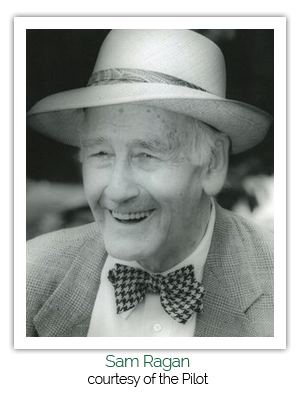
samragan

Who are your favorite poets of the Piedmont? Perhaps one of the great poets who has gone before us, like the charming and brilliant Sam Ragan – newspaperman, raconteur, and host to writers who came to Weymouth to pursue their craft. Or our own shining star, Maya Angelou. Or Helen Smith Bevington, champion of light verse. Perhaps you resonate to the poems of North Carolina Poet Laureates past and present, such as Fred Chappell and Shelby Stephenson. Or you constantly reread the poetry of our first Piedmont Laureate, Jaki Shelton Green. Maybe you love one of our astonishing teachers, such as Gerald Barrax or Betty Adcock, Michael Chitwood or Alan Shapiro, Michael McFee or Dorianne Laux, James Seay or James Applewhite. Your favorite Piedmont poet could be a friend, acquaintance or stranger who has impressed you at a reading, or a relative whose lyric words astonish you and make you see the world differently. Perhaps, your favorite poet of the Piedmont is yourself.

MAYAANGELOU-Nice1

Photo from http://www.soulwalking.co.uk/Respect2014.html

The list I’ve offered is only a beginning. As Doris Betts once said, “You can’t throw a stone in the Triangle without hitting a writer.” I’m guessing there may be even more poets in our area now than there were when she first made that statement. There’s no way my brief list can even begin to cover all the poets I love here, much less the ones I haven’t even met yet, which is why I need your help.

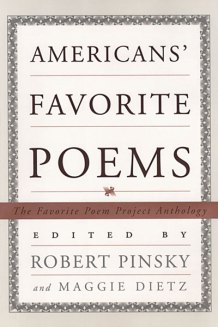
about_amfavpoems.jpgIn 1997, Robert Pinsky, the 39th Poet Laureate of the United States, created the Favorite Poem Project, in which he asked Americans to share the poems they loved most, and to give a brief explanation of why they’d chosen their poems.

This is our version of the Favorite Poem Project, for those of us who live in the heart of North Carolina, and for those who live beyond, but know the richness of our poetry. What better time in history to look for inspiration, for words that can carry us through and inspire us to be the people we want to be?

We want to hear about this poet whose work wakes you up in the morning, lets you sleep at night, eases you through the rough times and manages to capture that thing you’ve always felt but never known how to say.

And in particular, we want to know your favorite poem from these poets, so we can create an online catalogue of great poems to share throughout the Piedmont. What makes this your favorite Piedmont poem? Why do you want to share it with the world?

You can share your poem any way you like—write a comment on this blog post, or on Facebook at https://www.facebook.com/piedmontlaureate/ or email me at piedmontlaureate2017 at gmail.com. I’ll collect your poems and let you know later in the year about the different ways we’ll get to share them with our community. The more poems, we get, the richer and more comprehensive our collection will be. Just send me a link to the poem and your thoughts on why this poem matters. If the poem isn’t online, send the entire poem, and we’ll make sure it’s available to the world.

I look forward to hearing from you – revisiting poems that I’ve loved over the years and discovering new ones and sharing them with readers of poetry everywhere.


Do-it-Yourself Art Poetry Kit

25 Tuesday Apr 2017

Posted by Mimi Herman in Ekphrasis, Mimi Herman, Open Mic, Poetry, Reading, Uncategorized, Writing Advice

≈ Leave a comment

C-My_1_XYAEqOVOArt by Damian Stamer

UPDATE: Check out First Friday at United Arts and enjoy three for the price of one (absolutely free)! Come to United Arts Council at 410 Glenwood Ave., Suite 170, Raleigh on Friday, May 5th from 6:00 to 8:00 pm for an Art and Poetry Treasure Hunt, Word Bowl Poetry and open mic – and see Sheila Hall’s artwork while you’re there!


It’s almost May, and I’m looking forward to seeing those of you who live in the Triangle for our next two Art and Poetry Treasure Hunts at First Friday in Raleigh on May 5th and Last Friday in Hillsborough on May 26th. We had a great time in Carrboro last month, and I’m hoping a bunch of you will come out to write and read great poems about great art.

To make it even easier on you (and so all of you can try it out, even if you can’t make it to one of the art walks), I’m about to reveal the secret instructions for writing ekphrastic poems (poems about art) in this very blog. Are you ready? Here we go…

Art & Poetry Treasure Hunt Secret Instructions
Choose one of the ideas below to write a poem about art.

  • Imagine two works of art get married. Write a love poem from one to the other.*
  • Enter a painting and write about what you see and what’s happening all around you. Or write about what’s happening just off the edge of the canvas.*
  • Eavesdrop on what people are saying in a gallery and weave their conversations into a poem.*
  • Find a painting that’s noisy, smelly, or delicious, and write a poem about it.*
  • Write a poem about a tiny detail in a painting, like it’s a secret only you know.*
  • Think of a piece of art as a city, and write a poem like a tour describing the sites.*
  • Create one line, or one stanza, about each work of art you see, to make one poem.*
  • Imagine that the artwork is an animal. What is its habitat? What does it eat? How does it protect itself? How does it sleep?**
  • Write a dialogue between yourself and the artist. Ask the artist all the questions you’d like to ask, and make up the artist’s answers.**
  • Write a poem from the piece of art to the artist, or the other way around.**
  • Write in the voice of a person or object shown in the work of art.***
  • Imagine what was happening while the artist was creating the piece.***
  • Write a dialogue between characters in a work of art.***
  • Imagine a story behind what you see depicted in the piece.***
  • Choose your own way of writing about a piece of art that interests you.

*Gary Duehr, “Thirteen Ways of Writing Poetry in a Museum”
** Mimi Herman, Piedmont Laureate
***http://www.readwritethink.org

Now that I’ve revealed the secret instructions, it’s your turn.

Grab a pencil, pen or computer, find the nearest piece of art, and write your own ekphrastic poem. You can do this from the comfort of your own home, using that old Escher poster left over from your college days, your great-aunt Edna’s photograph of Venice or your favorite art from your favorite artist—via that modern miracle, the Internet. You pick the art, choose the prompt you want to use from the oh-so-secret instructions above and dash off a quick poem. Invite your kids, your parents, your friends and your great-aunt Edna to write some poems, too. These poems can be serious or goofy—or anywhere in between.

Then share your poems—as many as you like—in one of these four ways:

  1. Come to First Friday reading at the United Arts Council in Raleigh on May 5th or the Last Friday reading at Margaret Lane Gallery in Hillsborough on May 26th (click the links for details) and share your poem with us, using your most fabulous poet’s voice.
  2. Post your poem in a comment in response to this blog entry.
  3. Tweet your poem (if it’s brief enough) here: @PiedLaureate
  4. Post your poem on the Piedmont Laureate Facebook page here: https://www.facebook.com/piedmontlaureate/

Once you’ve experimented with ekphrastic poetry in the privacy of your own home, you may feel emboldened to venture further abroad. If so, you can visit these galleries in Raleigh http://www.godowntownraleigh.com/first-friday-raleigh/map any time between now and 8:00 pm on Friday, May 5th or these galleries in Hillsborough https://www.hillsboroughartscouncil.org/art-walk-last-fridays all month up to 8:00 pm on Friday, May 26th, and use the artwork you find there as inspiration to write more poems. Then scurry over to the reading to share your brilliance with an appreciative audience.

I can’t wait to see and hear what you write!

← Older posts
Newer posts →

About our laureates

  • Past Laureates

Join Us on Facebook

Join Us on Facebook

Enter your email address to subscribe to this blog and receive notifications of new posts by email.

Join 174 other subscribers

Piedmont Laureate Sponsors

Raleigh Artsuac-logo

Search

Website Powered by WordPress.com.

  • Subscribe Subscribed
    • Piedmont Laureate
    • Join 174 other subscribers
    • Already have a WordPress.com account? Log in now.
    • Piedmont Laureate
    • Subscribe Subscribed
    • Sign up
    • Log in
    • Report this content
    • View site in Reader
    • Manage subscriptions
    • Collapse this bar

Loading Comments...