• About
  • Past Laureates
  • Blog
  • Events
  • Resources
  • Contact Us

Piedmont Laureate

~ Promoting awareness and heightened appreciation for excellence in the literary arts throughout the Piedmont Region

Piedmont Laureate

Tag Archives: interview

The Piedmont Laureate Talks: With Frances Mayes About Her New Novel, A Marriage Secret, And Why You Must Not Wear White After Labor Day

26 Monday Aug 2024

Posted by Steven Petrow in Uncategorized

≈ Leave a comment

Tags

author, Frances Mayes, interview, piedmont laureate, Under the Tuscan Sun

If you know the novel, Under the Tuscan Sun, you likely know of its author, the inimitable Frances Mayes. The Georgia native, who now divides her time between a home in Italy and another in Durham, has also written other international bestseller, including Bella Tuscany and A Year in the World, not to mention three beautiful illustrated cookbooks. Having dined at her table, I can attest that her creativity with language extends to her artistry in the kitchen. From her kitchen table in Bramasole, where Mayes spent most of the summer with her husband Ed Mayes, she answered a handful of questions about her life as a writer, her new novel, A Great Marriage, and what inspires her. 

Q; Your most recent book, just published, is titled A Great Marriage (and it’s received outstanding reviews). What was the genesis of this novel? 

A: The opening line of the novel, “The wine spilled” came to me on its own volition and fortunately it carried me throughout the novel. I consider this my version of inspiration—when, unbidden, an image or a face or a line lands in your mind like the spore in the petri dish. These gifts are what writers live for, no?

Q: What would you say are the elements of a great marriage? I ask that knowing that both you and I have been divorced and that from every angle it appears you’re now in one great marriage to Ed Mayes. Do people ask you if there’s an autobiographical aspect to this novel (which is, of course, fiction)?

A: Fragments and collages of autobiography make up a lot of this novel. There’s my marriage secret, hard earned, in the plot of the novel, but I will say my idea of a great marriage is not based on compromise, as many therapists insist. There’s a sublime way, if you’re aware enough.

Q: Do you think you have another side career in you (in addition to Bramasole olive oil), perhaps as a wedding planner or etiquette advisor?

A: No, but yes to garden design, setting beautiful tables, renovating old houses, planning travel tours. Being from the deep South, you can be sure I have my ideas on etiquette. My mother’s phrases still ring in my ears: no white shoes after September, tattoos are tacky, let your date win the tennis match… I confess, I don’t really like to go to weddings!

Q: I think  your last book was A Place in The World: Finding the Meaning of Home. I know you split your time between Italy and North Carolina, rather different places. Where do you feel at home these days?

A: This year I traveled around the world and found so many new places to love, places I could live. But my long-loved home in Italy feels like home. And it’s odd to feel at home in a country that is not your own. 

Q: What’s next on your desk? Do you have a roadmap of next works already laid out?
A: I wish. I have no idea—just waiting for that furtive little phrase to float by my window. I admire those who are super organized in their writing process. Mine is erratic and uncharted. But over the years you learn to trust your rhythms. I do get a lot done.

Piedmont Laureate Reviews:  “In My Time of Dying” by Sebastian Junger 

16 Tuesday Jul 2024

Posted by Steven Petrow in Uncategorized

≈ Leave a comment

Tags

author, books, ernst-junger, interview, piedmont laureate

In his latest book, “In My Time of Dying,” the author of “The Perfect Storm” takes us on what may be the wildest and most frightening ride of his career. To read my full review, please click here.

For decades now, Sebastian Junger has taken readers to some of the most dangerous, bloody and remote outposts on this planet, including the deep sea (“The Perfect Storm”) and Afghanistan (“War”). In his latest book, “In My Time of Dying,” Junger takes us on what may be the wildest and most frightening ride of his career — not to the point of no return, but to its very precipice.

June 15, 2020, dawned for Junger much like any other not-quite-summer day on Cape Cod. But a silent storm had been brewing in the writer, then 58. That morning he was “wrenched from sleep by a dream of my wife and daughters sobbing and holding each other while I hovered over their heads, unable to communicate with them.” He screamed at them; he waved at them. It did not matter. In his dream, he learned that he had died, because as a voice explained to him, “I’d been careless.” He did not immediately connect that dream to the intermittent pain he’d had in his abdomen for more than nine months. He’d been ignoring it, since it came and went, but he remembers thinking at one point, “This is the kind of pain where you later find out you’re going to die.”

The next morning, he was awakened not by a dream, but by the pain, which soon ebbed. That afternoon, he uncharacteristically suggested to his wife that they visit a writing studio located deep in their wooded property. In some of the most compelling prose of his career, Junger details what happened next: “My abdomen seemed to be simply made of pain and nothing else,” and suddenly he was teetering between life and death. “Halfway to the hospital, a spasm shot through me that lifted my body off the stretcher. It felt like hot lava had been injected into me. A few minutes later I lost control of my bowels and a foul-smelling liquid left me, mostly blood.”

To read more, click here.

The Piedmont Laureate Interview: Banning Lyon, Author of The New Book, The Chair and The Valley, Talks About Mental Health, Resilience, And His New Family

12 Wednesday Jun 2024

Posted by Steven Petrow in Uncategorized

≈ Leave a comment

Tags

author, banning lyon, healing, interview, memoir, piedmont laureate, self help, steven petrow, trauma

[This interview was originally published on Maria Shriver’s Sunday Paper. To read
the whole interview, please click here.]

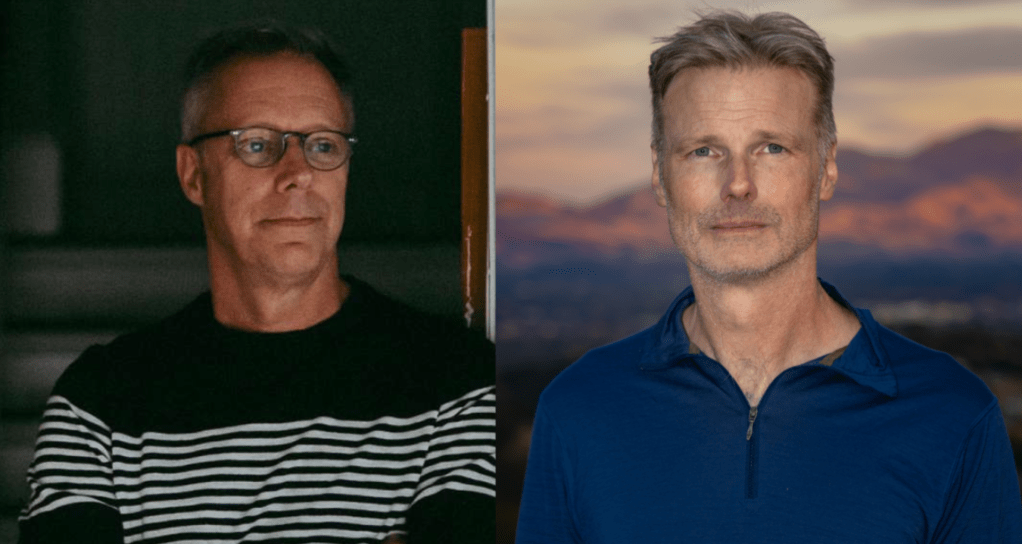
(from left: Steven Petrow and Banning Lyon)

At least once a year I post a meme that says, “You never know what someone is going through. Be kind.” It clocks high on “likes” because it speaks truth. What’s on the surface can hide a world of hurt.

That’s certainly true of Banning Lyon.

Looking at his Instagram feed, chock full of photos of his wife and young daughter, you’d never imagine what he has endured. At 15, a self-described skateboarding nut, his life changed radically when a guidance counselor in his Dallas high school suspected that Lyon was suicidal because he gave away his board to a friend (not believing what he said, which is that he was planning to buy a new one).  At the urging of the counselor, his parents admitted Lyon to a psychiatric hospital for a two-week stay, which turned into 353 days.

In his new memoir, The Chair and the Valley: A Memoir of Trauma, Healing, and the Outdoors, Lyon, now 52, reveals the mistreatment he endured. The chair in the title refers to “chair therapy,” supposedly intended to help him think about his problems but instead, consisted of 11 months sitting in a chair facing the wall, sometimes up to 12 hours a day. By the time Banning left the hospital, he writes, “I was the scattered wreckage of a teenager,” full of rage and fantasizing about hanging himself.

Lyon takes readers on a gut-wrenching story of trauma and healing, including his lawsuit against the facility’s owners who bilked insurance companies (like his father’s employer). Now, with a family of his own, Lyon finds peace in the wilderness and has found peace within himself—although you’d never understand the world of hurt he endured by looking at him: a middle-aged dad with hair he describes as “defiant,” who now works as a backpacking guide in Yosemite National Park.

This beautiful book is honest and raw. After all this time, why did you decide to write your story? 

The book began as a product of working with my therapist. She told me to “free write,” but I wouldn’t do that. I just kind of rolled my eyes at all of it, but eventually, ultimately decided to start. I wrote a lot, about 200 pages in four weeks, and that was it. It was done. It was just this cathartic surge of emotions and, really, had no cohesive narrative.

How did that mess of pages become a book Kirkus Reviews described as a “heartfelt memoir and an urgent demand for higher standards of juvenile mental health care”? 

An event during my work as a backpacking guide left me feeling very strongly that I had a moral obligation to write a book, that I’d be committing some kind of sin by not writing it. After spending days in the backcountry with clients I realized I wasn’t different from them. They weren’t better or more normal than me. Among them were alcoholics and cutters, people who had lost siblings and spouses to cancer and suicide. I realized then that I’d found my place in the world, and that I needed to come to terms with my past. I never would have found the courage without the serenity of nature and the help of my clients. So I committed to writing the book and it has been a long, difficult, and painful process.  

[To read the full interview, please click here.]

The Piedmont Laureate Interviews New York Times Bestselling novelist, Jill McCorkle, about her new book, “Old Crimes: and Other Stories” 

06 Monday May 2024

Posted by Steven Petrow in Uncategorized

≈ Leave a comment

Tags

author, bestseller, books, Fiction, interview, Jill McCorkle, Old Crimes, writing, writing-tips

When I bump into neighbor and bestselling novelist, Jill McCorkle, on one of Hillsborough’s tree-lined streets, I know it’s going to be a good day. There’s her smile for starters, and her Southern accent, which she says befuddles even Siri, and a big heart that embraces friend and stranger alike. Earlier this year her latest collection of stories, Old Crimes, was published to rave reviews. “Dazzling,” “splendid,” and “extraordinary” are just a few of her recent accolades. 

Q: You’ve been quite busy the past several years and now you have this new collection of stories. What was the impetus?

A: I always have a story idea or two in progress but find that when fully involved in a novel, I put the stories aside and just continue to add details and thoughts along the way as I store up for time post novel to give attention. Several of the stories had been published earlier, but the bulk of them were ideas left to simmer. I find that when this happens, there is often a thematic connection that begins to take shape, the same as it would if they were parts of a novel.  

Q: The promotional copy for Old Crimes says that you take “us deep into these conflicted and sympathetic characters, puzzling to figure out the meaning of their own lives.” Did writing these stories help you figure out more about the meaning of your own life?

A: I think that it is impossible to fully immerse yourself in a project and the lives of others, and not learn something about yourself, or experience a kind of resurrection—for better or worse–of a particular time or place or memory. I think the real beauty of aging is the ability to look back and see connections and meanings that you never saw before. For me—and I suspect for most of us—this is an endless process

Q: Would you characterize yourself as a Southern writer? If not, why not?

A: I am definitely a Southern writer in that I was born and raised in the south with all of my earliest memories firmly rooted in the microcosm of my hometown. I have an accent that Siri can’t decipher even after living in New England for 20 years. I share that complicated love/hate of the south that so many do. You love the foliage and language and much you associate with the notion of home and you despise a history steeped in racism and hatred and rigid judgments of all kinds.  I think that the danger of being labeled as a “southern” writer would be if it implies that your work is only of interest to others of the same region. In this collection, my characters move back and forth, sometimes in the south and sometimes in New England. After years of teaching in both places, I have come to think that on the page, the biggest divide is rural/ urban.  Students from small towns in New Hampshire or Maine often were very similar to those of the Carolinas. Different language and weather, but thematically kin.  

Q: When you are writing, what does a “typical” day look like for you?

A: I’m always writing and it was a great realization when I discovered that there was no on/off switch but a constant return/ revisit/ recognize all along the way. As a result, I am a compulsive note taker for fear of losing those fragments that blow in and out all day.  Then, when I sit down, I have a beginning of some sort and start typing. I love early morning and that is the time for collecting the ideas and thoughts and revisiting what is in place. I never come to the keyboard empty handed. I like that writing is so portable and so my day is pretty flexible as I go here and there, storing up for a big block of time that allows me to dive in. After almost 40 years, I am only now not teaching on a formal schedule and so I am coming into a place that offers more time than I have had since I was in college.  

Q: Do you have any suggestions for people who want to become writers, whether fiction, non-fiction or any other genre?

A: To borrow from Nike, the best advice really is Just Do It–get something on the page.  The best advice I got as a young writer was that I NOT censor or edit myself prematurely, that I get rid of whoever it was standing behind me with judgment and criticism, so that the first draft offered no concerns except to the characters and situation on the page. I begin each project telling myself that no one will ever have to see it, so let it fly.  It’s liberating to give yourself total freedom and THEN, in revision, you can think about other aspects, problem solve, etc. But there’s no way to get to step two without step one. You cannot sculpt something without first producing a big messy chunk of clay.  

About our laureates

  • Past Laureates

Join Us on Facebook

Join Us on Facebook

Enter your email address to subscribe to this blog and receive notifications of new posts by email.

Join 174 other subscribers

Piedmont Laureate Sponsors

Raleigh Artsuac-logo

Search

Website Powered by WordPress.com.

  • Subscribe Subscribed
    • Piedmont Laureate
    • Join 174 other subscribers
    • Already have a WordPress.com account? Log in now.
    • Piedmont Laureate
    • Subscribe Subscribed
    • Sign up
    • Log in
    • Report this content
    • View site in Reader
    • Manage subscriptions
    • Collapse this bar
 

Loading Comments...