The Golden Shovel poetry is a poetic form, created by poet Terrance Hayes, that allows a writer to pay homage to an existing poem. The form follows a set of rules invented by Hayes in homage to Gwendolyn Brooks, the former poet laureate and the first African-American to win the Pulitzer Prize. Hayes published his poem “The Golden Shovel” in Lighthead, his National Book Award winning collection in 2010. The poem takes its form from the lines of Gwendolyn Brooks’ “We Real Cool.”
Writing a Golden Shovel:
Take a line (or lines) from a poem you admire.
Use each word in the line (or lines) as an end word in your poem.
Keep the end words in order.
Give credit to the poet who originally wrote the line (or lines).
The new poem does not have to be about the same subject as the poem that offers the end words.
If you pull a line with six words, your poem would be six lines long. If you pull a stanza with 24 words, your poem would be 24 lines long.
“Deconstruction” literally means “to take something apart”.
A deconstruction involves taking a familiar story or work of art and changing it to create new themes or messages. Often it is done to modernize a story.
Part of the process is to take apart the source material to better understand its meaning and relevance to us in real life. This takes the form of questioning “How would this story play out with real life consequences applied to it?” Then the new piece can be crafted with this consideration in mind.
Take the elements popular story (or a set of characters) and reshape them into a modern narrative that delivers a relevant message or highlights a familiar situation or concern.
Below is an example I wrote using the Marvel family of Green Arrow…
Raising Speedy (a poem for Green Arrow and Black Canary)
I wish I had more to give him
We make ends meet
But the ends don’t always justify the means
I used to be part of the 1 percent
He could’ve had whatever he wanted then
Now I got 99 problems but a…
There are certain words you don’t say
When your wife’s scream can be deafening
Her response deadly
Let’s just say I don’t worry about whose got my back
I worry about him
I been trying to arrow this green for a minute
Know I break his heart with no
Hope he keeps making a speedy recovery
Our conversations get so heated
Unrelenting
An archer knows how to stick to the point
He wants prom to be the best time ever
I just want it to be able to affordable
Does he understand why we love Target
Why I dress in Arrow shirt and tie and sit at a desk everyday
I told him to get a part time at Michael’s
Only way working a bow can help put food on the table
He wants his prom night with Donna to be special
I wonder how that girl lassoed his heart like that
I keep looking for a flaw
Seems she keeps them invisible
She says his name like exotic fruit from the amazon
Roy
When she does he smiles like an arsenal of explosives
Now he frowns like broken promises
Tux rental, shoes
Don’t he get enough of wearing costumes
Pictures, dinner
I guess that’s a better night out than fighting crime
But the boy aint got no real job
Vigilantes works for less than minimum wage
Extended curfew?
I can’t have him vulnerable for that long
So I tell him
No limo
Here are keys to the car
Be careful
Home by midnight
Or you’ll have to suffer your step mother’s scream
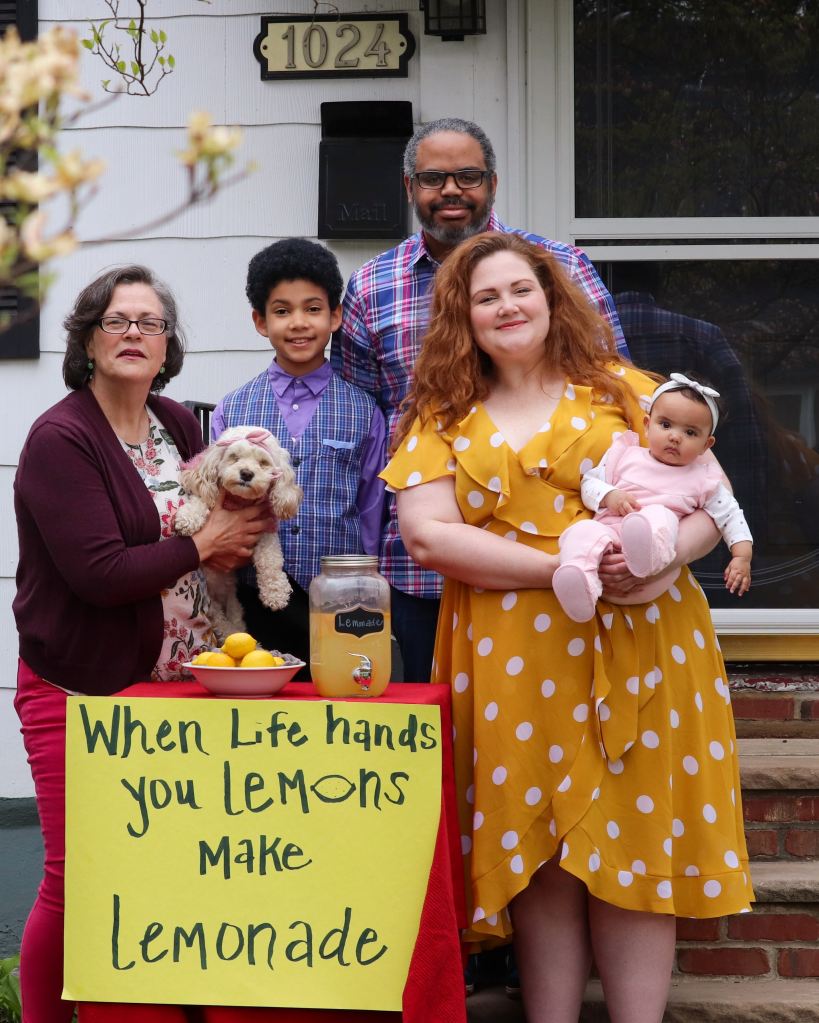
Here is a fun prompt to play with. You can google a photo to use with the prompt as an extra challenge. I provided one for you to try. Try not to make this about your family. That gives your creativity more room to work. Below is the prompt.
Imagine a portrait. Who is in it? Where was it taken? What are they doing in it? What story does the portrait tell? How did it come to be? We know what the portrait shows us, but what do we not see? What is it we would never know? Possible families: accountants, circus performers, criminals, librarians.
For this prompt you are going to write about “leaving.” You can approach it in any way that you want. Make sure you are the one leaving. You can leave anything, it doesn’t have to be a place.
What I want you to avoid is building up to the poem. As poets, we sometimes tend to start with lines of cover and fluff and them move to the crux of what we really want to talk about. It’s an safe way to get into the vulnerability of the piece. It is also not needed.
This is different than the use set ups (leading to a twist) or the work done to set a scene. Those build ups are functional. We want to draw the reader\listener into the poem. Not drag them into it.
A great way to engage from the beginning of the poem is to start with the subject doing something or saying something. It is a natural catalyst for forward progress. It sparks curiosity about what is going on. Now that you are moving ahead with the poem you can work backwards and you move forward providing any needed insight into how things got here.
You want to establish what is going on and the why it is happening or needed to happen. Don’t forget to make it clear in the poem what it all means. This trifecta, what is happening, why is it happening (or needs to happen), and what it means, is the framework of your approach to the poem. This is how you create room for the reader/listener to be immersed in the poem. It is also where those “ah-hah” moments come from. Those moments of realization, understanding, and shared emotion that make the poem resonate deeply.
End the poem strong and declaratively. Remember you are leaving or you left. Make it the closing moment you deserve.
“The only way of expressing emotion in the form of art is by finding an ‘objective correlative’; in other words, a set of objects, a situation, a chain of events which shall be the formula of that particular emotion; such that when the external facts, which must terminate in sensory experience, are given, the emotion is immediately evoked.”
TS Elliot (qtd. in J. A. Cuddon’s Dictionary of Literary Terms, page 647)
If writers or poets or playwrights want to create an emotional reaction in the audience, they must find a combination of images, objects, or description evoking the appropriate emotion. The source of the emotional reaction isn’t in one particular object, one particular image, or one particular word. Instead, the emotion originates in the combination of these phenomena when they appear together.
One of the hardest things for a writer to do is to convey a message to the reader without telling them what the message is.
Envision an object that would carry meaning for a person. Write a poem that shows what the meaning is and conveys the emotion attached to the object. What is the object? Why is it important? Think about the scene taking place that helps illuminate the significance of the object to the subject of the poem.
First, write down something you’ve overheard (sound, words, etc.). Then go over Patricia’s poem which paints this vivid scene and gives this context all from what she heard.
Then write the story behind what you overheard. Build the scene. Use sensory detail (feeding the 5 senses) as much as possible.




 Piedmont Laureate