• About
  • Past Laureates
  • Blog
  • Events
  • Resources
  • Contact Us

Piedmont Laureate

~ Promoting awareness and heightened appreciation for excellence in the literary arts throughout the Piedmont Region

Piedmont Laureate

Category Archives: Poetry

What’s Your Writing Routine?

07 Wednesday Jun 2017

Posted by Mimi Herman in Mimi Herman, Poetry, Writing Advice

≈ 3 Comments

IMG_5018

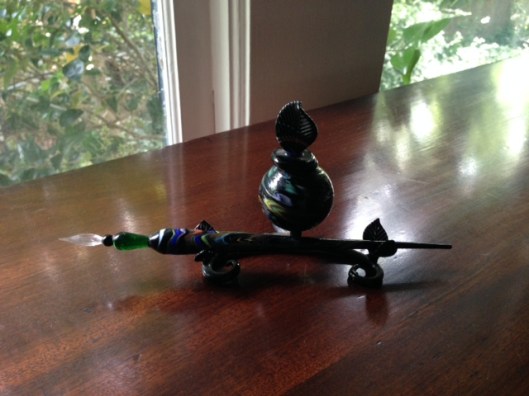
“What’s your writing routine?” If you’re a writer, you’re going to get this question or one of its derivatives: “Do you write every day?” “When?” “How much?” “For how long?”

I wish I could describe myself as the kind of person who gets up at 4:30 every morning and writes for two hours. Well, maybe 5:00. As far as I’m concerned, 4:30 is not an hour of the morning. It belongs to the night before. The truth is I’m a sporadic writer, an episodic writer, a make-a-new-resolution-every-few-months writer. I’ve only had two routines that have ever worked for me.

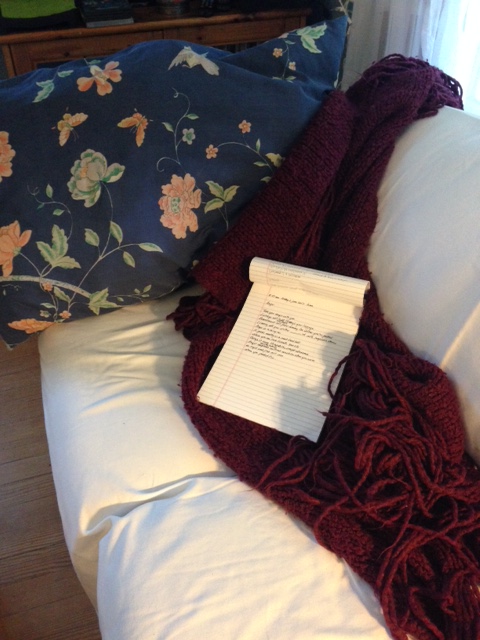
The first is to sit down with my calendar at the beginning of a year – which for me is August or September, since most of my other work is based on the school calendar – and block out a week every month just for writing. I actually put it on the calendar as if it’s work or a social engagement. For that week, I park my car around the corner, turn off the phone and the Internet, drink endless cups of Earl Grey tea and write, sometimes at my desk, sometimes on the couch, wrapped in a throw. When I’m describing this to other people, I often tell them “I have a writing month every week,” as if that were possible in this particular time-space continuum. Wishful thinking.

During my writing weeks, I write ten poems or ten pages of whatever novel I’m working on, each day. My poet friends get a very peculiar expression on their faces when I say phrases like “ten poems a day,” so I hasten to assure them that most of them are truly awful, mere exercises that warm me up and get me ready to write a decent poem or two. I have to sneak up on poetry, pretending that I’m not trying to write anything worthwhile, until something I like suddenly appears amidst the dreck. This means writing a lot of very bad poems. With fiction, it’s different. As soon I’ve tapped into the voice of my narrator, I’m usually good to go.
IMG_5017

If I’m writing poetry, I sit crossways on the couch and write very messy early drafts by hand with a fine point (0.7 mm) Uni-ball Vision Rollerball pen on a white legal pad, with lots of crossings-out and arrows to move lines to different places. Journal entries go into a notebook or bound book – in unpacking my books and other office materials from storage, I recently discovered that I have over twenty-five notebooks awaiting me, all clean and fresh, so maybe I should stop buying them for a while. A few years ago, I broke my attachment to writing fiction by hand, and started composing my novels on my computer, either at my desk or in the living room. I’m a fairly fast typist, so I can keep up with my thoughts, but I tend to take a “two words forward, one word back to correct a typo” approach.

I have to be very careful not to break my commitment to myself in any way during my writing weeks. If you’re a workaholic, as I am, it only takes one sniff of work to lure you to some dark alley where you’ll find yourself hooked on responsibilities again – a meeting attended, a workshop taught, even an email answered – and there goes that writing week. I wrote a note to myself several years ago, which I post when I’m fearful of sacrificing my writing for other work. It reads: “No phone, no electronics, no other people before 1:30 pm.” I recommend writing something like that for yourself. Feel free to adjust the time and admonitions as needed.

The other writing routine that sometimes works for me is to write fifteen minutes a day, every day. It doesn’t have to be good. It doesn’t have to be smart. It doesn’t have to connect with what you wrote yesterday or what you’re going to write tomorrow. Just fifteen minutes sometime before bedtime. If you miss a day, you don’t have to write thirty minutes tomorrow. Just start again with fifteen minutes. I invented this process when I finished my MFA, a time when many people stop writing for a while to recover from all those words. I wanted to keep myself going, so I started with the fifteen minutes a day plan – and wrote my first novel that way.

So now it’s your turn. When do you write? How much? By hand or the computer?

Share your own writing routine with the rest of us in your comments, and come join me at the next Piedmont Laureate event:

Flirting with Your Reader: A Workshop for All Writers
South Regional Durham Public Library – Meeting Room

June 15, 2017
7:00-8:30 pm

Find out more about this and other events at https://piedmontlaureate.org/readings-events/
IMG_5022

From My Shelves to Yours

24 Wednesday May 2017

Posted by Mimi Herman in Mimi Herman, Open Mic, Poetry, Reading, Writing Advice

≈ 1 Comment

My poor books. For the past year and a half – due to the confluence of an invasive raccoon, the life-changing magic of tidying up, an almost pathological inability to choose a paint color, and practically perpetual inertia – they’ve been held captive in cardboard boxes in undisclosed locations all over my house.

But now they’re free, and proudly arranged in bookcases according to organizing principles only I can understand. (I’ll give you a hint. I have several different categories of favorites, each with its own shelf.) I’ve finally sacrificed my passion for visual organization for the traditional alphabetization approach, and arranged all my fiction – hardback and paperback together – rather than separating them out (though I admit my trash reading has its own bookcase). And all those books of poetry by my friends and heroes, they have their shelf – under the watchful eye of the books on how to write poetry, why you need to write poetry, and what it all means, on the shelf above.

I can’t tell you how amazing it is to see all these old friends again, finally released from their captivity. Or how delightful it is to say, “I’d like to look that up,” and be able to go directly to the shelf to find that poem or quote or story.

IMG_4937Now that all my books have come home to roost again, and are happily nesting with their families, I thought I’d share a few of my favorites with you.
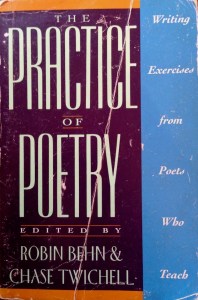
First of all, who can do without The Practice of Poetry, a marvelous collection of exercises edited by Robin Behn and Chase Twichell? This book includes such gems as Rita Dove’s “Your Mother’s Kitchen,” Garret Hongo’s “Not ‘The Oprah Winfrey Show’” and Linnea Johnson’s “Personal Universe Deck.” Whether you’re a beginning writer or a published poet looking to widen your spectrum of subjects and techniques, this one is worth a try.

IMG_4941

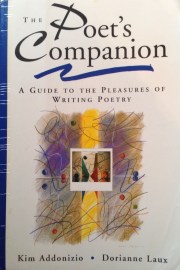
Along the same lines, I love Poet’s Companion, by Kim Addonizion and our own Dorianne Laux, which takes the reader-writer on a guided tour of a gorgeous continent of poetry, with stops in the contiguous countries of subject, craft and the writer’s life, and exercises all along the way.

Because I have such a girl-poet crush on Kim Addonizio, I also have her Ordinary Genius, which, I warn you, may make you dig more deeply into yourself than you’d originally planned.


IMG_4936


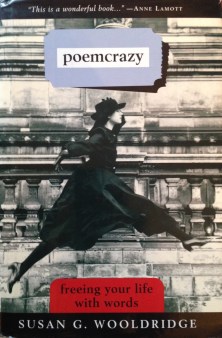
A little-known book you might like is Susan Wooldridge’s poemcrazy, which I bought shortly after meeting her through the California Poets in the Schools program. I thought she was charming, and found her book to be equally charming, with quirky approaches to writing poems, like “collecting words and creating a wordpool” and “skin spinoff.” If you’re just starting out as a poet, or utterly stuck, I recommend her book.


IMG_4942Lest you think I only like the girls, I recommend Ted Kooser’s The Poetry Home Repair Manual. Most of the time when I’m not writing or teaching poetry, I’m building cabinets, replacing toilets, finishing floors or sweating copper. So you can see how a home repair book about poetry might appeal to me.

If you’re like me, and enjoy playing with form, a highly useful and accessible book is Ron Padgett’s Handbook of Poetic Forms, from the terrific Teachers & Writers Collaborative, which gives you dozens of forms in alphabetical order, with easy instructions and examples.

IMG_4934If you write poetry with kids, as a teacher or as a parent, or if you’re a kid yourself, you’ve got to have the classic, Kenneth Koch’s Wishes, Lies and Dreams. Add to that Beyond Words, by my Lesley University colleague Elizabeth McKim and her friend Judith W. Steinbergh. Another book to add to that collection is Michael A. Carey’s Starting from Scratch, which was my guidebook all those years ago when I started out as a writer-in-the schools. It’s out of print, so it’s a little tricky to find, but worth buying if you can uncover a used copy.
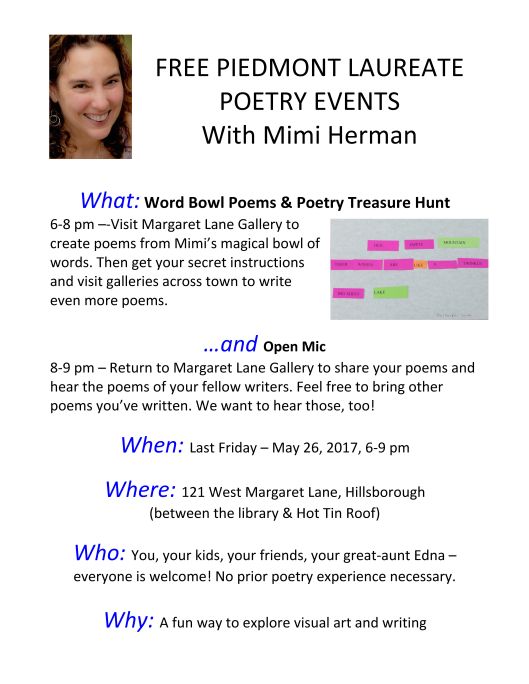
Speaking of writing with kids, I hope you’ll bring yours to Margaret Lane Gallery this Friday night for our Word Bowl and Art & Poetry Treasure Hunt evening. If you don’t have kids, bring a friend, a colleague or just your sense of adventure.

Hillsborough Last Friday Poetry Flyer.jpgStay tuned for more book recommendations in another blog post. I’ve got a whole collection of collections—and really readable prose that talks about the importance of poetry—that I can’t wait to share with you.

Do-it-Yourself Art Poetry Kit

25 Tuesday Apr 2017

Posted by Mimi Herman in Ekphrasis, Mimi Herman, Open Mic, Poetry, Reading, Uncategorized, Writing Advice

≈ Leave a comment

C-My_1_XYAEqOVOArt by Damian Stamer

UPDATE: Check out First Friday at United Arts and enjoy three for the price of one (absolutely free)! Come to United Arts Council at 410 Glenwood Ave., Suite 170, Raleigh on Friday, May 5th from 6:00 to 8:00 pm for an Art and Poetry Treasure Hunt, Word Bowl Poetry and open mic – and see Sheila Hall’s artwork while you’re there!


It’s almost May, and I’m looking forward to seeing those of you who live in the Triangle for our next two Art and Poetry Treasure Hunts at First Friday in Raleigh on May 5th and Last Friday in Hillsborough on May 26th. We had a great time in Carrboro last month, and I’m hoping a bunch of you will come out to write and read great poems about great art.

To make it even easier on you (and so all of you can try it out, even if you can’t make it to one of the art walks), I’m about to reveal the secret instructions for writing ekphrastic poems (poems about art) in this very blog. Are you ready? Here we go…

Art & Poetry Treasure Hunt Secret Instructions
Choose one of the ideas below to write a poem about art.

  • Imagine two works of art get married. Write a love poem from one to the other.*
  • Enter a painting and write about what you see and what’s happening all around you. Or write about what’s happening just off the edge of the canvas.*
  • Eavesdrop on what people are saying in a gallery and weave their conversations into a poem.*
  • Find a painting that’s noisy, smelly, or delicious, and write a poem about it.*
  • Write a poem about a tiny detail in a painting, like it’s a secret only you know.*
  • Think of a piece of art as a city, and write a poem like a tour describing the sites.*
  • Create one line, or one stanza, about each work of art you see, to make one poem.*
  • Imagine that the artwork is an animal. What is its habitat? What does it eat? How does it protect itself? How does it sleep?**
  • Write a dialogue between yourself and the artist. Ask the artist all the questions you’d like to ask, and make up the artist’s answers.**
  • Write a poem from the piece of art to the artist, or the other way around.**
  • Write in the voice of a person or object shown in the work of art.***
  • Imagine what was happening while the artist was creating the piece.***
  • Write a dialogue between characters in a work of art.***
  • Imagine a story behind what you see depicted in the piece.***
  • Choose your own way of writing about a piece of art that interests you.

*Gary Duehr, “Thirteen Ways of Writing Poetry in a Museum”
** Mimi Herman, Piedmont Laureate
***http://www.readwritethink.org

Now that I’ve revealed the secret instructions, it’s your turn.

Grab a pencil, pen or computer, find the nearest piece of art, and write your own ekphrastic poem. You can do this from the comfort of your own home, using that old Escher poster left over from your college days, your great-aunt Edna’s photograph of Venice or your favorite art from your favorite artist—via that modern miracle, the Internet. You pick the art, choose the prompt you want to use from the oh-so-secret instructions above and dash off a quick poem. Invite your kids, your parents, your friends and your great-aunt Edna to write some poems, too. These poems can be serious or goofy—or anywhere in between.

Then share your poems—as many as you like—in one of these four ways:

  1. Come to First Friday reading at the United Arts Council in Raleigh on May 5th or the Last Friday reading at Margaret Lane Gallery in Hillsborough on May 26th (click the links for details) and share your poem with us, using your most fabulous poet’s voice.
  2. Post your poem in a comment in response to this blog entry.
  3. Tweet your poem (if it’s brief enough) here: @PiedLaureate
  4. Post your poem on the Piedmont Laureate Facebook page here: https://www.facebook.com/piedmontlaureate/

Once you’ve experimented with ekphrastic poetry in the privacy of your own home, you may feel emboldened to venture further abroad. If so, you can visit these galleries in Raleigh http://www.godowntownraleigh.com/first-friday-raleigh/map any time between now and 8:00 pm on Friday, May 5th or these galleries in Hillsborough https://www.hillsboroughartscouncil.org/art-walk-last-fridays all month up to 8:00 pm on Friday, May 26th, and use the artwork you find there as inspiration to write more poems. Then scurry over to the reading to share your brilliance with an appreciative audience.

I can’t wait to see and hear what you write!

Art and Poetry Treasure Hunts: Write Your Own Ekphrastic Poems

12 Wednesday Apr 2017

Posted by Mimi Herman in Ekphrasis, Genres, Mimi Herman, Open Mic, Poetry, Reading, Uncategorized, Writing Advice

≈ 3 Comments

Happy National Poetry Month! Here’s wishing you a month of inspiration and a year of writing, reading and listening to poetry.

For a chance to write your own poems and read them at an open mic event, join us on one of the Friday Night Art Walks for an Art & Poetry Treasure Hunt this April or May. We’ll eavesdrop on what other people are saying in galleries, write love letters from one piece of art to another and take journeys inside of paintings and photographs to discover what it’s like to live inside a piece of art.

Here are the details:

Art & Poetry Treasure Hunts

Dates and Locations
Friday, April 14, 2017 — The ArtsCenter, 300 G East Main Street, Carrboro, NC 27510
Friday, May 5, 2017 — United Arts Council, 410 Glenwood Avenue, Suite 170
Raleigh, NC 27603
Friday, May 26 — Margaret Lane Gallery, 121 W. Margaret Lane, Hillsborough, NC 27278

Schedule
6:00 to 7:30 pm — Art & Poetry Treasure Hunt
Drop by the galleries above during this time to pick up your treasure map, notepad and pen, and the secret directions to create your poems.

8:00 to 9:00 pm — Open Mic Reading
Return to the gallery to read some of the poems you’ve created in your gallery wanderings.

*   *   *

Ekphrasis. It sounds like something that calls for a heavy dose of antibiotics, doesn’t it? Actually, it’s just a fancy Greek word for poetry about art, though it may well become contagious this April and May on the Friday night art walks in Chapel Hill/Carrboro, Raleigh and Hillsborough.

As you might imagine, poets have been writing about art for a good long time. It started with Homer painting a word picture of Achilles’ shield in the Iliad. Later, Plato went on to describe the “bedness” of a bed in The Republic, and Socrates had a chat with Phaedrus about writing and painting:

“You know, Phaedrus, that is the strange thing about writing, which makes it truly correspond to painting.
The painter’s products stand before us as though they were alive,
but if you question them, they maintain a most majestic silence.
It is the same with written words; they seem to talk
to you as if they were intelligent, but if you ask them anything
about what they say, from a desire to be instructed,
they go on telling you just the same thing forever.

Plato, Phaedrus 275d

Sosobios_Vase

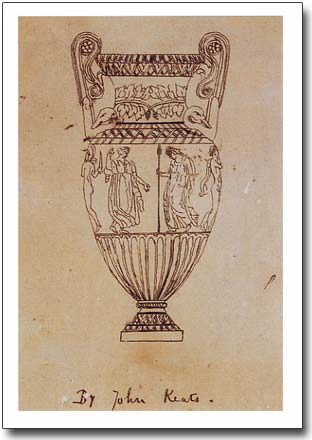
Long before the Internet, before we could even create reproductions of art in books and on posters, ekphrastic poems offered art lovers a virtual museum, where they could “see” art from the comfort of their own armchairs. In the Italian Renaissance, Ekphrasis became popular again, and in 1819, John Keats wrote one of the most famous ekphrastic poems in history, “Ode on a Grecian Urn,” which you can find here, at The Poetry Foundation website.


http://www.keats-shelley-house.org/en/shop/postcards

In more recent times, W. H. Auden described Bruegel’s painting, Landscape with the Fall of Icarus in this ekphrastic poem:

Musee des Beaux Art
W. H. Auden

About suffering they were never wrong,
The old Masters: how well they understood
Its human position: how it takes place
While someone else is eating or opening a window or just walking dully along;
How, when the aged are reverently, passionately waiting
For the miraculous birth, there always must be
Children who did not specially want it to happen, skating
On a pond at the edge of the wood:
They never forgot
That even the dreadful martyrdom must run its course
Anyhow in a corner, some untidy spot
Where the dogs go on with their doggy life and the torturer’s horse
Scratches its innocent behind on a tree.

In Breughel’s Icarus, for instance: how everything turns away
Quite leisurely from the disaster; the ploughman may
Have heard the splash, the forsaken cry,
But for him it was not an important failure; the sun shone
As it had to on the white legs disappearing into the green
Water, and the expensive delicate ship that must have seen
Something amazing, a boy falling out of the sky,
Had somewhere to get to and sailed calmly on.

http://english.emory.edu/classes/paintings&poems/auden.html

icarus

In 1960, William Carlos Williams had his own take on the same painting:

Landscape with the Fall of Icarus

William Carlos Williams

According to Brueghel
when Icarus fell
it was spring

a farmer was ploughing
his field

the whole pageantry

of the year was
awake tingling
with itself

sweating in the sun
that melted
the wings’ wax

unsignificantly
off the coast
there was

a splash quite unnoticed
this was
Icarus drowning

from http://english.emory.edu/classes/paintings&poems/williams.html

You can discover links to more ekphrastic poems here and here.

I hope you’ll join us for one or all of the Art and Poetry Treasure Hunts, where you’ll be inspired by local art to write your own ekphrastic poems. Whether you’ve been writing poems all your life, or your poetry career came to an abrupt halt at “Roses are red,” we’d love to have you. Bring your family. All ages are welcome.

Twitter Haiku Writing Challenge and Free Poetry Party at Duke Gardens!

28 Tuesday Mar 2017

Posted by Mimi Herman in Mimi Herman, Poetry, Uncategorized, Writing Advice

≈ Leave a comment

Tags

duke gardens, haikai no renga, haiku, upcoming events

Writing haiku, like riding a bicycle, is one of those things you never forget. Even if you’re a few years out of elementary school, you probably remember how it goes: three lines, with five syllables in the first line, seven syllables in the second line, and five syllables in the third.

Here’s a haiku by Matsuo Basho, a famous Japanese poet who lived from 1644 to 1694. Note: this is a poem in translation, so in English it doesn’t exactly follow the 5-7-5 syllable format.

27176352086_69eb6a0e42_z

from https://www.flickr.com/photos/131326857@N03/27176352086/in/photostream/

Over the next few weeks, I invite you to haul out your haiku skills from the garage of your brain and take them for a spin on Twitter. Here’s all you have to do:

  1. Go to @PiedLaureate.
  2. Check out the most recent haiku you see there.
  3. Write your own haiku that follows naturally from the one before it. Use 5 syllables in the first line, 7 syllables in the second line and 5 in the third.
  4. Feel free to be funny. There’s no rule saying all haiku have to be serious.
  5. Let’s see how many haiku we can create! You’re welcome to add as many as you like.

Then on Saturday, April 8th, you’re invited to join me at a free Poetry Party at Duke Gardens from 10:30 am to 12:00 noon, where we’ll leave the training wheels of Twitter behind and write poems together in person.

You don’t have to be a poet to come — or even to have added a haiku to our Twitterku (though I hope you will). Just come out and enjoy writing poetry in the beautiful Duke Gardens in springtime.All ages and writing abilities are welcome! Bring your family and friends!

For those of you like to know how things get started, haiku began in medieval Japan, when poets would travel miles to meet for a poetry party of their own. Once the party started, one poet would compose the first stanza, known as the hokku, in honor of the host, making a reference to whatever season it happened to be. The host would then write the next stanza, responding to the first one, and from there on out, everyone would get to take turns writing stanzas for the haikai no renga, or “linked verse,” alternating stanzas of 5-7-5 syllable stanzas with 7-7 syllable stanzas until they’d reached a hundred stanzas altogether. And, just to make the party more fun, they made up rules about when you could mention the moon, or flowers, or each season or…love. That first verse, the hokku, eventually became a poem by itself, a haiku. 

If you really want to geek out on haikai no renga, here’s a great article: http://simplyhaiku.com/SHv5n1/features/Arntzen.html. And here’s another one, with the rules we’ll be using for our Poetry Party: http://www.ahapoetry.com/Bare%20Bones/RBless6.html

So take up the Twitterku challenge and join me in writing your own haiku on Twitter, then bring your fabulous haiku writing skills to Duke Gardens on the morning of April 8th for our Poetry Party!

Piedmont Laureate Twitterku Challenge: @PiedLaureate.

Poetry Party at Duke Gardens
Date: Saturday, April 8, 2017
Time: 10:30 am to 12:00 noon
Location: Meet at the Doris Duke Center to be escorted to the poetry party


Piedmont Laureate Coming Attractions

15 Wednesday Mar 2017

Posted by Mimi Herman in Mimi Herman, Poetry, Uncategorized

≈ Leave a comment

Tags

upcoming events

 
IMG_4614It hasn’t been much of a winter, despite a couple of good days when I got to break out my yard sale cross-country skis and tour the snowy neighborhood, doing my best to stay upright and make forward progress at the same time. So when we achieved bathing suit temperatures last week, I felt guilty. How could we be getting spring so soon, when we hadn’t even endured winter yet? Surely we didn’t deserve such beautiful weather. Maybe this weather was being given to those of us who believe in global warming so we could say, “See, it really is true.”
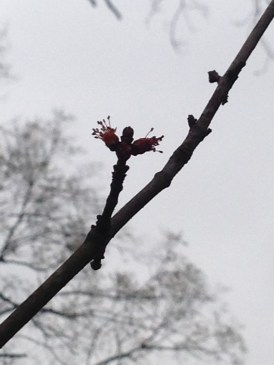
But as someone who needs lots of light to stay upright and make forward progress, the sunlight and warmth came as a welcome gift, and got me even more excited about some of the events I’m planning as Piedmont Laureate. Now that the temperatures have dipped a bit again, here are a few tidbits about upcoming events to keep you going until the next warm spell.

In the upcoming months, I’ll be holding an Art Poetry Treasure Hunt at each of the Friday Art Walks, followed by an open mic reading to share the poems you’ve written. The first one will occur at Second Friday on April 14th in Chapel Hill and Carrboro, where you’ll receive your own treasure map of art galleries, a pad of paper to carry with you as you explore those galleries, and a variety of ways to write poetry. Then we’ll all gather to read the marvelous poems you’ve created on your art adventure.

IMG_4645

On April 8th, from 1:00 to 2:30, I invite you to join me at a Poetry Party in Duke Gardens to celebrate spring. In ancient Japan, poets traveled miles for poetry parties. We’ll travel to the Culberson Asiatic Arboretum for our inspiration and collaborate to write a 100-stanza Haikai no Renga style of poem, considered the origin of modern haiku. No poetry experience or knowledge of Japanese needed, just the desire to enjoy nature and beauty in great company. All ages and writing abilities welcome! We’ll meet at the Doris Duke Center to be escorted to the poetry party. In my next blog post, on March 29th, I’ll tell you more about Haikai no Renga, and you can start practicing with Twitter haiku.

Over the next few months, I’ll be offering various free workshops at libraries throughout Orange, Wake and Durham counties, with subject ranging from “Innovative Approaches to Revision” to “The Geography of Your Life” (where you’ll create three-dimensional maps of your life) to “Flirting with Your Reader.”

Then, keep looking ahead to autumn, when I’ll team up with the amazing educators from the North Carolina Museum of Natural Sciences for a paddle and science poetry tour, so you can exercise your body while you strengthen your powers of observation.

mim-kayak-on-the-river-2016 copy

Keep your eye on the Piedmont Laureate Events page for details on these events and more as they develop. I look forward to seeing you soon!


← Older posts
Newer posts →

About our laureates

  • Past Laureates

Join Us on Facebook

Join Us on Facebook

Enter your email address to subscribe to this blog and receive notifications of new posts by email.

Join 174 other subscribers

Piedmont Laureate Sponsors

Raleigh Artsuac-logo

Search

Website Powered by WordPress.com.

  • Subscribe Subscribed
    • Piedmont Laureate
    • Join 174 other subscribers
    • Already have a WordPress.com account? Log in now.
    • Piedmont Laureate
    • Subscribe Subscribed
    • Sign up
    • Log in
    • Report this content
    • View site in Reader
    • Manage subscriptions
    • Collapse this bar
 

Loading Comments...