
I love dichotomies. I don’t completely believe in them, of course, but they’re fun to play with.
So here’s one for you.
There are two kinds of people in the world: planners and wingers. The minute I say this to a group of people, everyone starts nodding. They may not be precisely sure of what I mean, but they have a pretty good idea.
A planner, I tell them, knows what she’s going to wear the next day before she goes to bed the night before. More nods. The motto of a winger, on the other hand, is, “How can I know what I mean until I see what I say?” Laughter and more nods.
I ask for a show of hands from the people who think they’re planners. Their friends tend to look pointedly at them if their hands don’t shoot up quickly enough. Everyone knows who the planners are. They’re the ones who sit around tapping their fingers at 3:00 pm when you said you’d be ready. The planners are a little embarrassed to be called out like this, and say things like “I know I’m a bit anal, but I just like to do things right.” On the inside, though, they’re pretty proud that everyone actually recognizes how organized they are.
Planners like lists. They’re irresistibly drawn to outlines. They want to know the rules in advance so they can be sure to follow them. Neatness counts for planners, and they’re likely to be as hard on themselves for lack of neatness as they are for less than stellar content.
Then I ask the wingers to raise their hands. A number of slow hands go up, accompanied by sheepish smiles. In our world, it’s not thought of too highly to be a winger, even though many of us are. We may secretly prefer to be planners, but we’re just not built that way.
The minute wingers sit down to write, the gates are up and they’re sprinting for the finish line—wherever and whatever that might happen to be. The best wingers know they’re wingers and are willing to make improvements using a very handy process we call revision. But often wingers feel that whatever they’ve created in a moment of passion can’t be changed, because they can never reconstruct that precise recipe of emotions and environmental factors. That moment was that moment and shall never return.
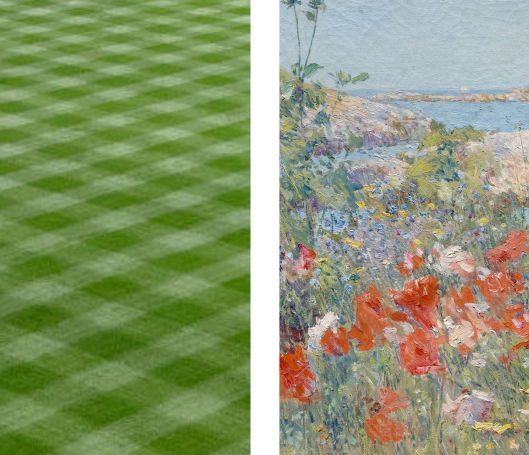
Most of us tend to land on one side of the fence or the other. The well-seeded and watered, neatly mowed side of the planners, or the wingers’ side, which is a bit overgrown but has all sorts of unexpected wildflowers popping up in it, and a lot of birds diving down to nibble on the tall grasses. Planners can wear white all day without smudging. Wingers could stain a clean shirt in a sterile operating room—before the patient is brought in. Wingers are prone to run-on sentences. Planners could probably diagram theirs.
But the truth is that most of us have are both planners and wingers, depending on the situation and what we need to accomplish. Planners can venture into the unknown; wingers can organize their thoughts. This is why dichotomies are tricky. We’re rarely all one thing or another.
And a good writer is usually both.
Photo Credits:
Grass: https://alpineservices.com
Wildflowers: Detail from “Celia Thaxter’s Garden, Isles of Shoals, Maine,” Childe Hassam
http://www.metmuseum.org/art/collection/search/14930?sortBy=Relevance&ao=on&ft=wildflowers&offset=0&rpp=20&pos=2



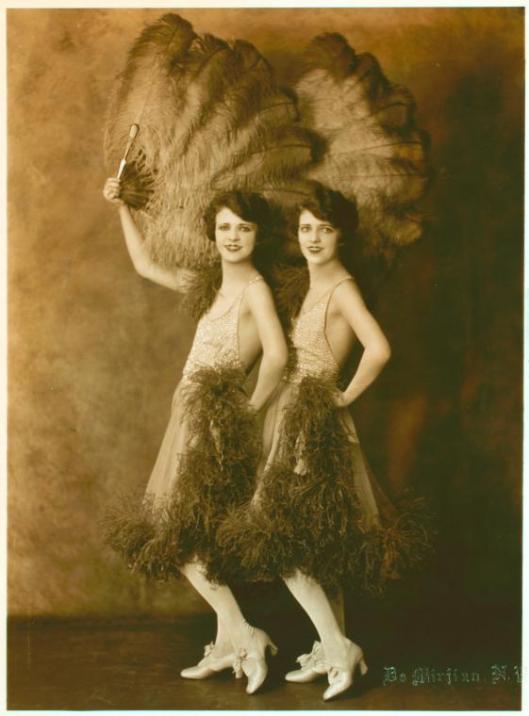

 Over the years, our teachers have learned to make their own shadow puppets to bring fables, myths and fairy tales to life. They’ve danced the water cycle, the rock cycle, pressure systems and punctuation. They’ve acted out civil rights, become immigrants to America in 1901, and written letters overseas from the home front in World War II. They’ve ventured on treasure hunts into the world of Multiple Intelligences and made colorful three-dimensional maps of their brains. They’ve built bugs from plastic bottles, created Claymation ecosystems, and extracted poetry from scientific concepts. They’ve written their own blues and released the composers trapped inside themselves—even those who didn’t believe they could carry a tune in a bucket. They’ve explored Cuba, Ghana and Zimbabwe through music, and Appalachia through photography and poetry. They’ve written and performed a 1920s musical in the North Carolina Museum of History in a mere three hours and used their X-ray vision to conjure poetry and paintings from satellite maps of their favorite places.
 And everything they’ve done, they’ve brought back to their classrooms to make magic of the curriculum, to get their students excited about learning, and to remind themselves of why they became teachers in the first place.
 Piedmont Laureate