Piedmont Laureate Talks: Petrow Shares Secrets On How To Age Better Than Your Parents

Tags

, , ,

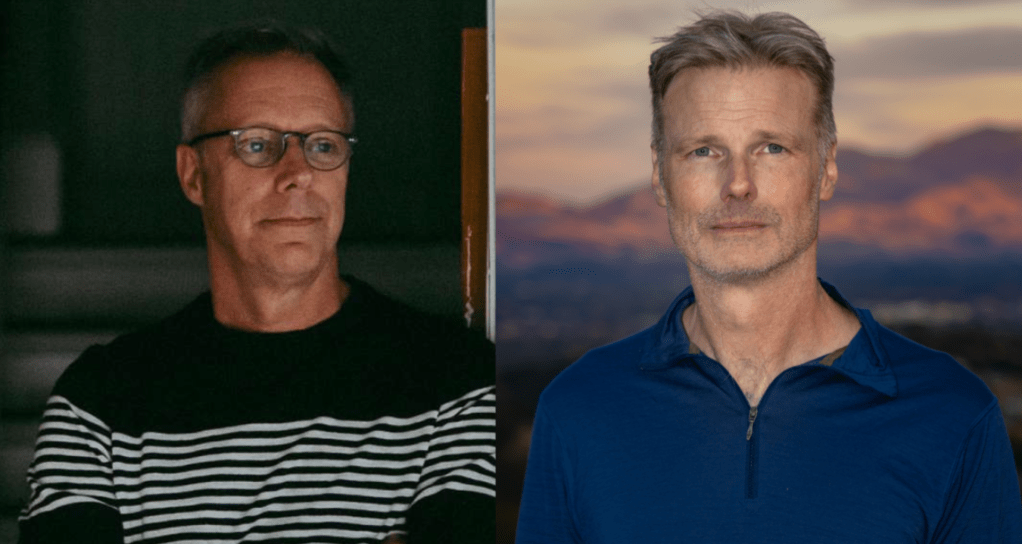
WASHINGTON, D.C. (7News) — Award-winning journalist and book author Steven Petrow joined Good Morning Washington recently to provide exclusive tips that will help people age gracefully and avoid making the same health mistakes made by their parents.

“We have to be a little more aware of what we’re doing and make some small adjustments as we go along,” Petrow said. “Doing one thing was fine when I was 20, but not so much in my sixties.”

Petrow’s essay in the Washington Post, “Five tips for aging better than your parents,” provides strategies for younger generations to curb signs of poor aging, while embracing healthy habits.

In the article, the contributing columnist and author of the forthcoming book, The Joy You Make, focuses on efforts to “age smarter” by valuing the gifts that come with aging, while taking any necessary steps to make life less difficult.

Petrow noted that as individuals get older, there can be a stigma about utilizing hearing aids or glasses. He emphasized the importance of prioritizing health, rather than being stubborn when it comes to implementing helpful assistance.

Based on continued research and personal experiences with his parents, Petrow curated a list of “things not to do as he gets older.” After collecting items over the decades, he transformed the record into his most recent book, Stupid Things I Won’t Do When I Get Old.

According to Petrow, a key tip to aging flawlessly is staying connected to others. He explained that it’s critical as you get older to stay “in the mix” of emerging technology and innovation.

The journalist also mentioned that an extensive amount of his research shows that nurturing intergenerational relationships is critical to successful aging and includes positive benefits on health and psychological well-being.

“Smiling also releases dopamine and serotonin, which makes us feel happy and less stressed,” Petrow said. “And when you are doing that with someone else, you are bouncing that energy back and forth. “

Piedmont Laureate Reviews:  “In My Time of Dying” by Sebastian Junger 

Tags

, , , ,

In his latest book, “In My Time of Dying,” the author of “The Perfect Storm” takes us on what may be the wildest and most frightening ride of his career. To read my full review, please click here.

For decades now, Sebastian Junger has taken readers to some of the most dangerous, bloody and remote outposts on this planet, including the deep sea (“The Perfect Storm”) and Afghanistan (“War”). In his latest book, “In My Time of Dying,” Junger takes us on what may be the wildest and most frightening ride of his career — not to the point of no return, but to its very precipice.

June 15, 2020, dawned for Junger much like any other not-quite-summer day on Cape Cod. But a silent storm had been brewing in the writer, then 58. That morning he was “wrenched from sleep by a dream of my wife and daughters sobbing and holding each other while I hovered over their heads, unable to communicate with them.” He screamed at them; he waved at them. It did not matter. In his dream, he learned that he had died, because as a voice explained to him, “I’d been careless.” He did not immediately connect that dream to the intermittent pain he’d had in his abdomen for more than nine months. He’d been ignoring it, since it came and went, but he remembers thinking at one point, “This is the kind of pain where you later find out you’re going to die.”

The next morning, he was awakened not by a dream, but by the pain, which soon ebbed. That afternoon, he uncharacteristically suggested to his wife that they visit a writing studio located deep in their wooded property. In some of the most compelling prose of his career, Junger details what happened next: “My abdomen seemed to be simply made of pain and nothing else,” and suddenly he was teetering between life and death. “Halfway to the hospital, a spasm shot through me that lifted my body off the stretcher. It felt like hot lava had been injected into me. A few minutes later I lost control of my bowels and a foul-smelling liquid left me, mostly blood.”

To read more, click here.

ACLU and ACLU of South Carolina Sound Alarm on Sweeping New Book Ban Law, Now In Effect

Tags

, , , , , , , , , ,

After a South Carolina regulation on book banning went into effect on June 25, 2024, Jace Woodrum, executive director of the American Civil Liberties Union of S.C. told me: 

“South Carolinians are less free today than they were yesterday. By crafting and promoting a broad new book-banning policy, Superintendent Ellen Weaver has handed a blunt instrument to her ideological allies in the pro-censorship lobby. We still believe in academic freedom and will fight tooth and nail alongside teachers, librarians, students, and parents against the ongoing campaign of harassment and intimidation in public schools and libraries.”

Here’s more background on the new regulation from the ACLU and ACLU S.C.

COLUMBIA, S.C. — A South Carolina regulation that would enable mass censorship of books in school classrooms and libraries is set for automatic approval tomorrow, June 25th.

Titled “Uniform Procedure for Selection or Reconsideration of Instructional Materials,” this regulation was crafted by Ellen Weaver’s South Carolina Department of Education and sets a statewide policy banning books that contain descriptions of “sexual conduct” and “excretory functions.” This broad definition could be used to remove a vast range of literature from South Carolina schools, including classics like The Canterbury Tales, 20th-century masterpieces like 1984, and even children’s books like Everyone Poops.

“Superintendent Weaver is seeking to hand unprecedented power to pro-censorship groups, overriding students’ freedom to read as well as parents’ right to direct their own children’s education,” said Josh Malkin, advocacy director at ACLU of South Carolina. “At a time when we can’t afford to lose more educators, the superintendent’s book banning policy would place mountains of paperwork and a threat of punishment on the backs of public school teachers and librarians. We’re calling on the superintendent to walk back this dangerous and draconian regulation.”

This broad-reaching policy is set to take effect automatically, despite the fact that it was not debated or voted upon by either the state Senate or House as process typically dictates. School districts can decide if this policy applies retroactively, however it is automatic going forward. Librarians have been left without guidance as to how to go forward with future purchases, and there’s worry that the districts that decide to defend books will be flooded with challenges. A similar policy in Iowa, for example, has already led to the removal of books including Native SonUlysses, and The Color Purple from schools.

Over the past year, pro-censorship organizations have tried banning books in bulk via local school boards in at least a dozen counties, but they have largely been thwarted when districts listened to parents, teachers, and librarians who actually read the books. As the ACLU of South Carolina has repeatedly explained, the regulation would undermine parental rights and harm public education by throwing open the floodgates for mass book bans by encouraging self-appointed censors to impose their beliefs on all South Carolinians via appeals to the State Board of Education.

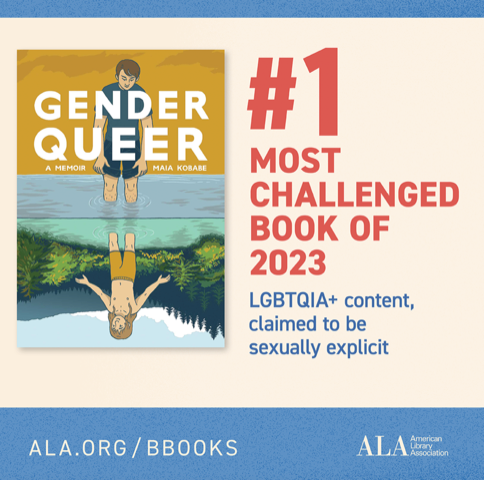
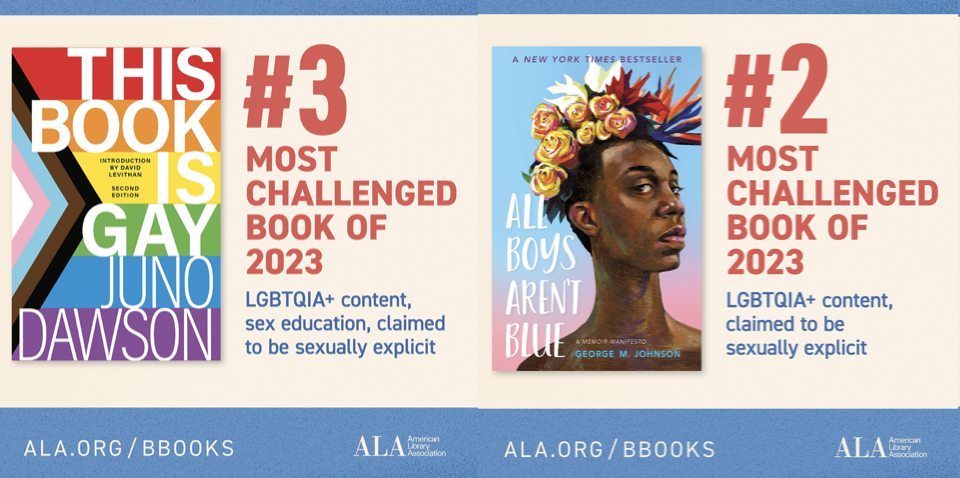
South Carolina’s regulation is part of a troubling nationwide book ban trend. The American Library Association recently documented that in 2023, 4,240 unique book titles were targeted for censorship, and there were over 1,247 demands to censor library books, materials, and resources.

The ACLU and ACLU of South Carolina will continue to fight for a public education system where all students can see themselves, their experiences, and their histories reflected on library shelves — as well as where they can learn to think for themselves.

Piedmont Laureate Pride Panels: Queer Authors Hold Court At Quail Ridge Books and at the Chapel Hill Library (with Flyleaf Books) To Talk About Their Work, The Meaning of Pride, and The Importance of Representation

Tags

, , ,

I’ve taken pride in being the first openly queer Piedmont Laureate, especially this month, which 

is generally recognized as Pride Month commemorating the Stonewall Uprising that took place in June 1969. LGBTQ+ authors of all genres have helped us to witness and remember, to imagine and invent. (Some of my personal favorites include James Baldwin, Audre Lorde, Alison Bechdel, Larry Kramer, Pauli Murray, Essex Hemphill, Paul Monette, and Rita Mae Brown.)

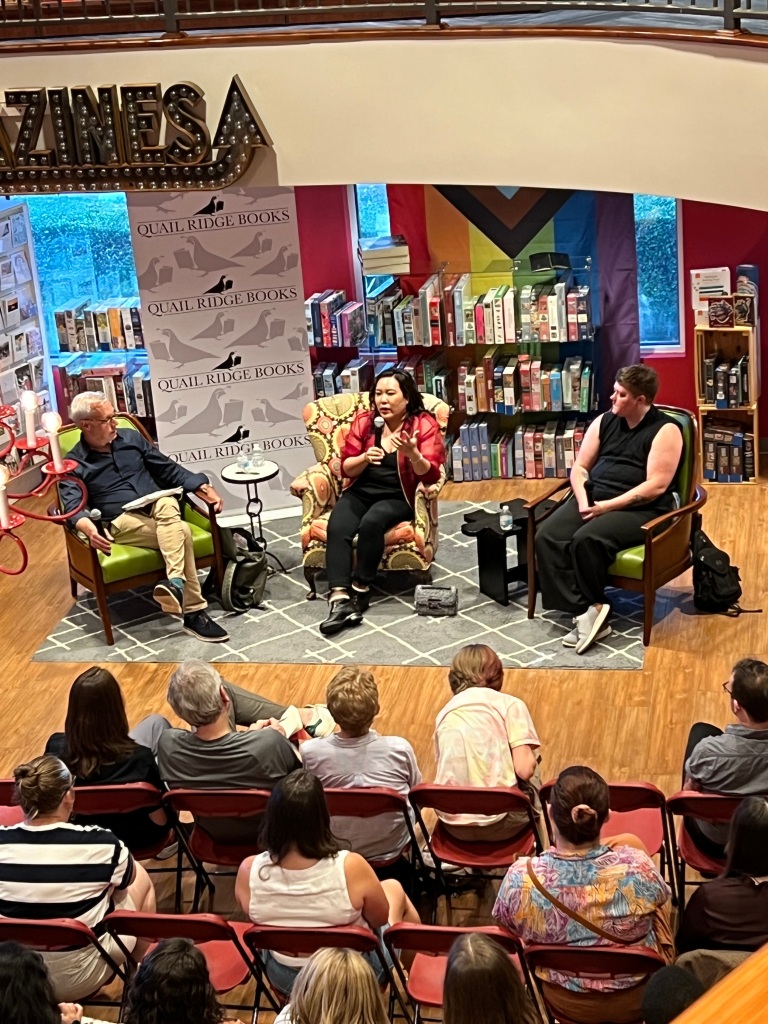
To that list I can add some new favorites. With the assistance of Quail Ridge Books in Raleigh, North Carolina writers S. Jae-Jones and Arden Coutts joined me for a discussion last week of their works, identity, representation and normalization, and much more. We had a full room of very engaged readers and fans!

(A portion of all book sales were donated by Quail Ridge Books to The LGBT Center of Raleigh.)

Piedmont Laureate Steven Petrow (L), S. Jae-Jones (Middle), and Arden Coutts at Quail Ridge Books. 

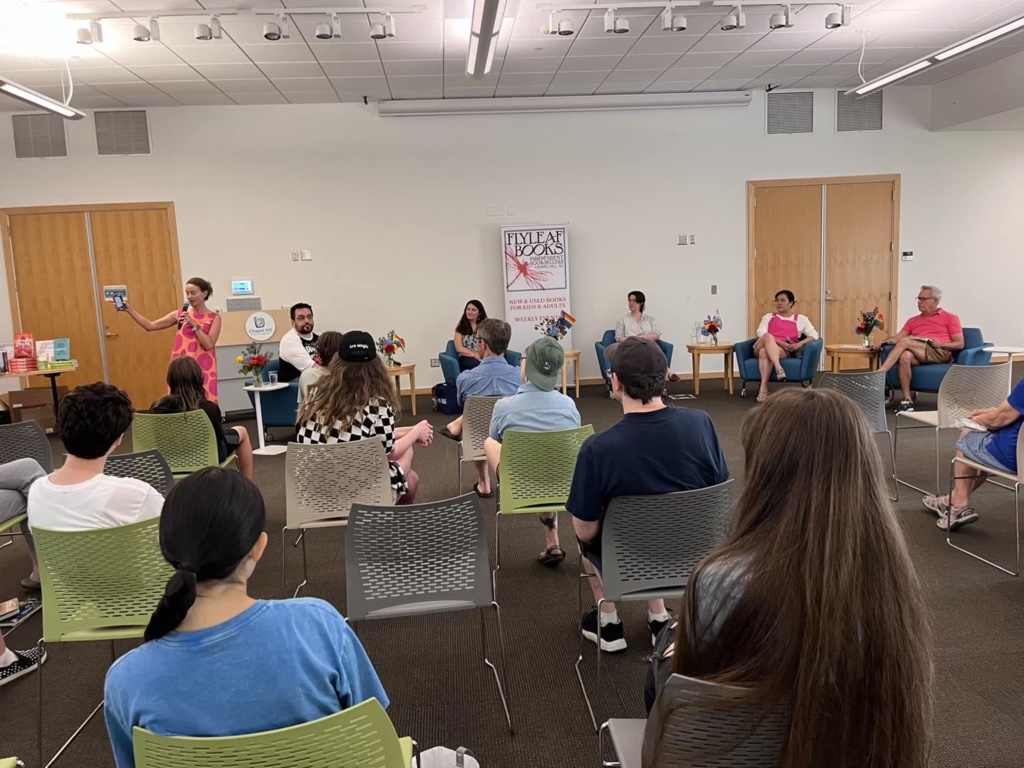
This past Saturday, June 22, Flyleaf Books of Chapel Hill collaborated with the Chapel Hill Library (and me) to host another wonderful conversation titled, “We Write To Make It Better: The Need For Queer And Diverse YA.” Close to 50 audience members, most of them “young adults,” came out of the heat to listen to my fellow writers, Nita Tyndall, Sarah Van Name, Jeremy Whitley, and S. Jae-Jones. What an exciting afternoon for all of us.

Pride panel at the Chapel Hill Library. Jeremy Whitley (L to R), Sarah Van Name, Nita Tyndall, S. Jae-Jones, and Steven Petrow

The Piedmont Laureate Interview: Banning Lyon, Author of The New Book, The Chair and The Valley, Talks About Mental Health, Resilience, And His New Family

Tags

, , , , , , , ,

[This interview was originally published on Maria Shriver’s Sunday Paper. To read
the whole interview, please click here.]

(from left: Steven Petrow and Banning Lyon)

At least once a year I post a meme that says, “You never know what someone is going through. Be kind.” It clocks high on “likes” because it speaks truth. What’s on the surface can hide a world of hurt.

That’s certainly true of Banning Lyon.

Looking at his Instagram feed, chock full of photos of his wife and young daughter, you’d never imagine what he has endured. At 15, a self-described skateboarding nut, his life changed radically when a guidance counselor in his Dallas high school suspected that Lyon was suicidal because he gave away his board to a friend (not believing what he said, which is that he was planning to buy a new one).  At the urging of the counselor, his parents admitted Lyon to a psychiatric hospital for a two-week stay, which turned into 353 days.

In his new memoir, The Chair and the Valley: A Memoir of Trauma, Healing, and the Outdoors, Lyon, now 52, reveals the mistreatment he endured. The chair in the title refers to “chair therapy,” supposedly intended to help him think about his problems but instead, consisted of 11 months sitting in a chair facing the wall, sometimes up to 12 hours a day. By the time Banning left the hospital, he writes, “I was the scattered wreckage of a teenager,” full of rage and fantasizing about hanging himself.

Lyon takes readers on a gut-wrenching story of trauma and healing, including his lawsuit against the facility’s owners who bilked insurance companies (like his father’s employer). Now, with a family of his own, Lyon finds peace in the wilderness and has found peace within himself—although you’d never understand the world of hurt he endured by looking at him: a middle-aged dad with hair he describes as “defiant,” who now works as a backpacking guide in Yosemite National Park.

This beautiful book is honest and raw. After all this time, why did you decide to write your story? 

The book began as a product of working with my therapist. She told me to “free write,” but I wouldn’t do that. I just kind of rolled my eyes at all of it, but eventually, ultimately decided to start. I wrote a lot, about 200 pages in four weeks, and that was it. It was done. It was just this cathartic surge of emotions and, really, had no cohesive narrative.

How did that mess of pages become a book Kirkus Reviews described as a “heartfelt memoir and an urgent demand for higher standards of juvenile mental health care”? 

An event during my work as a backpacking guide left me feeling very strongly that I had a moral obligation to write a book, that I’d be committing some kind of sin by not writing it. After spending days in the backcountry with clients I realized I wasn’t different from them. They weren’t better or more normal than me. Among them were alcoholics and cutters, people who had lost siblings and spouses to cancer and suicide. I realized then that I’d found my place in the world, and that I needed to come to terms with my past. I never would have found the courage without the serenity of nature and the help of my clients. So I committed to writing the book and it has been a long, difficult, and painful process.  

[To read the full interview, please click here.]

The Piedmont Laureate Talks About YA LGBTQ+ Books, Voices, and Stories Sponsored by Flyleaf Books and the Orange County Arts Commission at the Chapel Hill Library, June 22, 2 p.m.

Tags

, , , , , , , ,

This is from Flyleaf Books in Chapel Hill: June is here, and we’re gearing up for all the amazing events we have planned! On Saturday, June 22, we are heading over to Chapel Hill Public Library with five incredible authors to celebrate and discuss the importance of YA LGBTQ+ voices and stories. Join us for the panel at 2 pm! You can RSVP at https://www.quailridgebooks.com/event.

The afternoon will feature conversation and readings from YA authors S. Jae-JonesNita TyndallSarah Van Name, and Jeremy Whitley and will be moderated by the 2024 NC Piedmont Laureate Steven Petrow. Topics discussed may include creating diverse and queer characters, the writing process, and book-banning. There will be an opportunity to purchase books by these authors and have them signed at the event.