Your Favorite Piedmont Poems

samragan

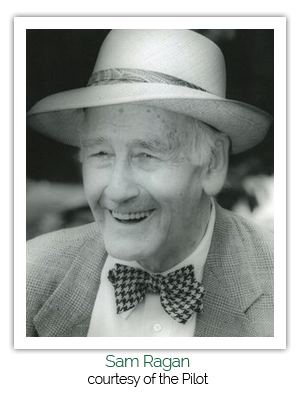
Who are your favorite poets of the Piedmont? Perhaps one of the great poets who has gone before us, like the charming and brilliant Sam Ragan – newspaperman, raconteur, and host to writers who came to Weymouth to pursue their craft. Or our own shining star, Maya Angelou. Or Helen Smith Bevington, champion of light verse. Perhaps you resonate to the poems of North Carolina Poet Laureates past and present, such as Fred Chappell and Shelby Stephenson. Or you constantly reread the poetry of our first Piedmont Laureate, Jaki Shelton Green. Maybe you love one of our astonishing teachers, such as Gerald Barrax or Betty Adcock, Michael Chitwood or Alan Shapiro, Michael McFee or Dorianne Laux, James Seay or James Applewhite. Your favorite Piedmont poet could be a friend, acquaintance or stranger who has impressed you at a reading, or a relative whose lyric words astonish you and make you see the world differently. Perhaps, your favorite poet of the Piedmont is yourself.

MAYAANGELOU-Nice1

Photo from http://www.soulwalking.co.uk/Respect2014.html

The list I’ve offered is only a beginning. As Doris Betts once said, “You can’t throw a stone in the Triangle without hitting a writer.” I’m guessing there may be even more poets in our area now than there were when she first made that statement. There’s no way my brief list can even begin to cover all the poets I love here, much less the ones I haven’t even met yet, which is why I need your help.
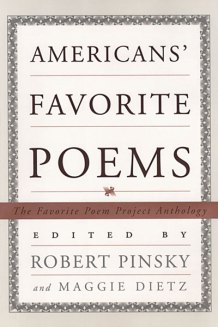
about_amfavpoems.jpgIn 1997, Robert Pinsky, the 39th Poet Laureate of the United States, created the Favorite Poem Project, in which he asked Americans to share the poems they loved most, and to give a brief explanation of why they’d chosen their poems.

This is our version of the Favorite Poem Project, for those of us who live in the heart of North Carolina, and for those who live beyond, but know the richness of our poetry. What better time in history to look for inspiration, for words that can carry us through and inspire us to be the people we want to be?

We want to hear about this poet whose work wakes you up in the morning, lets you sleep at night, eases you through the rough times and manages to capture that thing you’ve always felt but never known how to say.

And in particular, we want to know your favorite poem from these poets, so we can create an online catalogue of great poems to share throughout the Piedmont. What makes this your favorite Piedmont poem? Why do you want to share it with the world?

You can share your poem any way you like—write a comment on this blog post, or on Facebook at https://www.facebook.com/piedmontlaureate/ or email me at piedmontlaureate2017 at gmail.com. I’ll collect your poems and let you know later in the year about the different ways we’ll get to share them with our community. The more poems, we get, the richer and more comprehensive our collection will be. Just send me a link to the poem and your thoughts on why this poem matters. If the poem isn’t online, send the entire poem, and we’ll make sure it’s available to the world.

I look forward to hearing from you – revisiting poems that I’ve loved over the years and discovering new ones and sharing them with readers of poetry everywhere.


Do-it-Yourself Art Poetry Kit

C-My_1_XYAEqOVOArt by Damian Stamer

UPDATE: Check out First Friday at United Arts and enjoy three for the price of one (absolutely free)! Come to United Arts Council at 410 Glenwood Ave., Suite 170, Raleigh on Friday, May 5th from 6:00 to 8:00 pm for an Art and Poetry Treasure Hunt, Word Bowl Poetry and open mic – and see Sheila Hall’s artwork while you’re there!


It’s almost May, and I’m looking forward to seeing those of you who live in the Triangle for our next two Art and Poetry Treasure Hunts at First Friday in Raleigh on May 5th and Last Friday in Hillsborough on May 26th. We had a great time in Carrboro last month, and I’m hoping a bunch of you will come out to write and read great poems about great art.

To make it even easier on you (and so all of you can try it out, even if you can’t make it to one of the art walks), I’m about to reveal the secret instructions for writing ekphrastic poems (poems about art) in this very blog. Are you ready? Here we go…

Art & Poetry Treasure Hunt Secret Instructions
Choose one of the ideas below to write a poem about art.

  • Imagine two works of art get married. Write a love poem from one to the other.*
  • Enter a painting and write about what you see and what’s happening all around you. Or write about what’s happening just off the edge of the canvas.*
  • Eavesdrop on what people are saying in a gallery and weave their conversations into a poem.*
  • Find a painting that’s noisy, smelly, or delicious, and write a poem about it.*
  • Write a poem about a tiny detail in a painting, like it’s a secret only you know.*
  • Think of a piece of art as a city, and write a poem like a tour describing the sites.*
  • Create one line, or one stanza, about each work of art you see, to make one poem.*
  • Imagine that the artwork is an animal. What is its habitat? What does it eat? How does it protect itself? How does it sleep?**
  • Write a dialogue between yourself and the artist. Ask the artist all the questions you’d like to ask, and make up the artist’s answers.**
  • Write a poem from the piece of art to the artist, or the other way around.**
  • Write in the voice of a person or object shown in the work of art.***
  • Imagine what was happening while the artist was creating the piece.***
  • Write a dialogue between characters in a work of art.***
  • Imagine a story behind what you see depicted in the piece.***
  • Choose your own way of writing about a piece of art that interests you.

*Gary Duehr, “Thirteen Ways of Writing Poetry in a Museum”
** Mimi Herman, Piedmont Laureate
***http://www.readwritethink.org

Now that I’ve revealed the secret instructions, it’s your turn.

Grab a pencil, pen or computer, find the nearest piece of art, and write your own ekphrastic poem. You can do this from the comfort of your own home, using that old Escher poster left over from your college days, your great-aunt Edna’s photograph of Venice or your favorite art from your favorite artist—via that modern miracle, the Internet. You pick the art, choose the prompt you want to use from the oh-so-secret instructions above and dash off a quick poem. Invite your kids, your parents, your friends and your great-aunt Edna to write some poems, too. These poems can be serious or goofy—or anywhere in between.

Then share your poems—as many as you like—in one of these four ways:

  1. Come to First Friday reading at the United Arts Council in Raleigh on May 5th or the Last Friday reading at Margaret Lane Gallery in Hillsborough on May 26th (click the links for details) and share your poem with us, using your most fabulous poet’s voice.
  2. Post your poem in a comment in response to this blog entry.
  3. Tweet your poem (if it’s brief enough) here: @PiedLaureate
  4. Post your poem on the Piedmont Laureate Facebook page here: https://www.facebook.com/piedmontlaureate/

Once you’ve experimented with ekphrastic poetry in the privacy of your own home, you may feel emboldened to venture further abroad. If so, you can visit these galleries in Raleigh http://www.godowntownraleigh.com/first-friday-raleigh/map any time between now and 8:00 pm on Friday, May 5th or these galleries in Hillsborough https://www.hillsboroughartscouncil.org/art-walk-last-fridays all month up to 8:00 pm on Friday, May 26th, and use the artwork you find there as inspiration to write more poems. Then scurry over to the reading to share your brilliance with an appreciative audience.

I can’t wait to see and hear what you write!

Art and Poetry Treasure Hunts: Write Your Own Ekphrastic Poems

Happy National Poetry Month! Here’s wishing you a month of inspiration and a year of writing, reading and listening to poetry.

For a chance to write your own poems and read them at an open mic event, join us on one of the Friday Night Art Walks for an Art & Poetry Treasure Hunt this April or May. We’ll eavesdrop on what other people are saying in galleries, write love letters from one piece of art to another and take journeys inside of paintings and photographs to discover what it’s like to live inside a piece of art.

Here are the details:

Art & Poetry Treasure Hunts

Dates and Locations
Friday, April 14, 2017 — The ArtsCenter, 300 G East Main Street, Carrboro, NC 27510
Friday, May 5, 2017 — United Arts Council, 410 Glenwood Avenue, Suite 170
Raleigh, NC 27603
Friday, May 26 — Margaret Lane Gallery, 121 W. Margaret Lane, Hillsborough, NC 27278

Schedule
6:00 to 7:30 pm — Art & Poetry Treasure Hunt
Drop by the galleries above during this time to pick up your treasure map, notepad and pen, and the secret directions to create your poems.

8:00 to 9:00 pm — Open Mic Reading
Return to the gallery to read some of the poems you’ve created in your gallery wanderings.

*   *   *

Ekphrasis. It sounds like something that calls for a heavy dose of antibiotics, doesn’t it? Actually, it’s just a fancy Greek word for poetry about art, though it may well become contagious this April and May on the Friday night art walks in Chapel Hill/Carrboro, Raleigh and Hillsborough.

As you might imagine, poets have been writing about art for a good long time. It started with Homer painting a word picture of Achilles’ shield in the Iliad. Later, Plato went on to describe the “bedness” of a bed in The Republic, and Socrates had a chat with Phaedrus about writing and painting:

“You know, Phaedrus, that is the strange thing about writing, which makes it truly correspond to painting.
The painter’s products stand before us as though they were alive,
but if you question them, they maintain a most majestic silence.
It is the same with written words; they seem to talk
to you as if they were intelligent, but if you ask them anything
about what they say, from a desire to be instructed,
they go on telling you just the same thing forever.

Plato, Phaedrus 275d

Sosobios_Vase

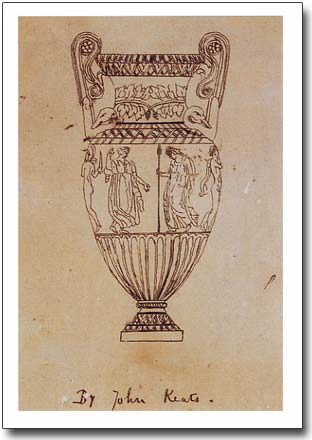
Long before the Internet, before we could even create reproductions of art in books and on posters, ekphrastic poems offered art lovers a virtual museum, where they could “see” art from the comfort of their own armchairs. In the Italian Renaissance, Ekphrasis became popular again, and in 1819, John Keats wrote one of the most famous ekphrastic poems in history, “Ode on a Grecian Urn,” which you can find here, at The Poetry Foundation website.


http://www.keats-shelley-house.org/en/shop/postcards

In more recent times, W. H. Auden described Bruegel’s painting, Landscape with the Fall of Icarus in this ekphrastic poem:

Musee des Beaux Art
W. H. Auden

About suffering they were never wrong,
The old Masters: how well they understood
Its human position: how it takes place
While someone else is eating or opening a window or just walking dully along;
How, when the aged are reverently, passionately waiting
For the miraculous birth, there always must be
Children who did not specially want it to happen, skating
On a pond at the edge of the wood:
They never forgot
That even the dreadful martyrdom must run its course
Anyhow in a corner, some untidy spot
Where the dogs go on with their doggy life and the torturer’s horse
Scratches its innocent behind on a tree.

In Breughel’s Icarus, for instance: how everything turns away
Quite leisurely from the disaster; the ploughman may
Have heard the splash, the forsaken cry,
But for him it was not an important failure; the sun shone
As it had to on the white legs disappearing into the green
Water, and the expensive delicate ship that must have seen
Something amazing, a boy falling out of the sky,
Had somewhere to get to and sailed calmly on.

http://english.emory.edu/classes/paintings&poems/auden.html

icarus

In 1960, William Carlos Williams had his own take on the same painting:

Landscape with the Fall of Icarus

William Carlos Williams

According to Brueghel
when Icarus fell
it was spring

a farmer was ploughing
his field

the whole pageantry

of the year was
awake tingling
with itself

sweating in the sun
that melted
the wings’ wax

unsignificantly
off the coast
there was

a splash quite unnoticed
this was
Icarus drowning

from http://english.emory.edu/classes/paintings&poems/williams.html

You can discover links to more ekphrastic poems here and here.

I hope you’ll join us for one or all of the Art and Poetry Treasure Hunts, where you’ll be inspired by local art to write your own ekphrastic poems. Whether you’ve been writing poems all your life, or your poetry career came to an abrupt halt at “Roses are red,” we’d love to have you. Bring your family. All ages are welcome.

Twitter Haiku Writing Challenge and Free Poetry Party at Duke Gardens!

Tags

, , ,

Writing haiku, like riding a bicycle, is one of those things you never forget. Even if you’re a few years out of elementary school, you probably remember how it goes: three lines, with five syllables in the first line, seven syllables in the second line, and five syllables in the third.

Here’s a haiku by Matsuo Basho, a famous Japanese poet who lived from 1644 to 1694. Note: this is a poem in translation, so in English it doesn’t exactly follow the 5-7-5 syllable format.

27176352086_69eb6a0e42_z

from https://www.flickr.com/photos/131326857@N03/27176352086/in/photostream/

Over the next few weeks, I invite you to haul out your haiku skills from the garage of your brain and take them for a spin on Twitter. Here’s all you have to do:

  1. Go to @PiedLaureate.
  2. Check out the most recent haiku you see there.
  3. Write your own haiku that follows naturally from the one before it. Use 5 syllables in the first line, 7 syllables in the second line and 5 in the third.
  4. Feel free to be funny. There’s no rule saying all haiku have to be serious.
  5. Let’s see how many haiku we can create! You’re welcome to add as many as you like.

Then on Saturday, April 8th, you’re invited to join me at a free Poetry Party at Duke Gardens from 10:30 am to 12:00 noon, where we’ll leave the training wheels of Twitter behind and write poems together in person.

You don’t have to be a poet to come — or even to have added a haiku to our Twitterku (though I hope you will). Just come out and enjoy writing poetry in the beautiful Duke Gardens in springtime.All ages and writing abilities are welcome! Bring your family and friends!

For those of you like to know how things get started, haiku began in medieval Japan, when poets would travel miles to meet for a poetry party of their own. Once the party started, one poet would compose the first stanza, known as the hokku, in honor of the host, making a reference to whatever season it happened to be. The host would then write the next stanza, responding to the first one, and from there on out, everyone would get to take turns writing stanzas for the haikai no renga, or “linked verse,” alternating stanzas of 5-7-5 syllable stanzas with 7-7 syllable stanzas until they’d reached a hundred stanzas altogether. And, just to make the party more fun, they made up rules about when you could mention the moon, or flowers, or each season or…love. That first verse, the hokku, eventually became a poem by itself, a haiku. 

If you really want to geek out on haikai no renga, here’s a great article: http://simplyhaiku.com/SHv5n1/features/Arntzen.html. And here’s another one, with the rules we’ll be using for our Poetry Party: http://www.ahapoetry.com/Bare%20Bones/RBless6.html

So take up the Twitterku challenge and join me in writing your own haiku on Twitter, then bring your fabulous haiku writing skills to Duke Gardens on the morning of April 8th for our Poetry Party!

Piedmont Laureate Twitterku Challenge: @PiedLaureate.

Poetry Party at Duke Gardens
Date: Saturday, April 8, 2017
Time: 10:30 am to 12:00 noon
Location: Meet at the Doris Duke Center to be escorted to the poetry party


Piedmont Laureate Coming Attractions

Tags

 
IMG_4614It hasn’t been much of a winter, despite a couple of good days when I got to break out my yard sale cross-country skis and tour the snowy neighborhood, doing my best to stay upright and make forward progress at the same time. So when we achieved bathing suit temperatures last week, I felt guilty. How could we be getting spring so soon, when we hadn’t even endured winter yet? Surely we didn’t deserve such beautiful weather. Maybe this weather was being given to those of us who believe in global warming so we could say, “See, it really is true.”
But as someone who needs lots of light to stay upright and make forward progress, the sunlight and warmth came as a welcome gift, and got me even more excited about some of the events I’m planning as Piedmont Laureate. Now that the temperatures have dipped a bit again, here are a few tidbits about upcoming events to keep you going until the next warm spell.

In the upcoming months, I’ll be holding an Art Poetry Treasure Hunt at each of the Friday Art Walks, followed by an open mic reading to share the poems you’ve written. The first one will occur at Second Friday on April 14th in Chapel Hill and Carrboro, where you’ll receive your own treasure map of art galleries, a pad of paper to carry with you as you explore those galleries, and a variety of ways to write poetry. Then we’ll all gather to read the marvelous poems you’ve created on your art adventure.

IMG_4645

On April 8th, from 1:00 to 2:30, I invite you to join me at a Poetry Party in Duke Gardens to celebrate spring. In ancient Japan, poets traveled miles for poetry parties. We’ll travel to the Culberson Asiatic Arboretum for our inspiration and collaborate to write a 100-stanza Haikai no Renga style of poem, considered the origin of modern haiku. No poetry experience or knowledge of Japanese needed, just the desire to enjoy nature and beauty in great company. All ages and writing abilities welcome! We’ll meet at the Doris Duke Center to be escorted to the poetry party. In my next blog post, on March 29th, I’ll tell you more about Haikai no Renga, and you can start practicing with Twitter haiku.

Over the next few months, I’ll be offering various free workshops at libraries throughout Orange, Wake and Durham counties, with subject ranging from “Innovative Approaches to Revision” to “The Geography of Your Life” (where you’ll create three-dimensional maps of your life) to “Flirting with Your Reader.”

Then, keep looking ahead to autumn, when I’ll team up with the amazing educators from the North Carolina Museum of Natural Sciences for a paddle and science poetry tour, so you can exercise your body while you strengthen your powers of observation.

mim-kayak-on-the-river-2016 copy

Keep your eye on the Piedmont Laureate Events page for details on these events and more as they develop. I look forward to seeing you soon!


The Faces Behind the Journals & Presses

Tags

, , , , , , , , , , ,

If you have the nerve, I recommend attending the AWP Conference, a massive writers’ conference that travels to different cities in the US each year. Imagine spending several days in the company of 12,000 other partially socialized introverts, trying to make the painful choice among far too many simultaneous panel discussions, visiting hundreds of tables at the book fair, and desperately searching for that small dark closet in which you can recover from all this stimulation. Really it’s a lot more fun than I’m making it sound, and you’re always likely to see someone you know. And the swag is excellent.

This year, the conference was held in Washington DC, an interesting place to visit at the moment, considering other things currently occurring in our nation’s capital. Except for an NEA panel and a trek to find some surprisingly good French fries, I spent my entire time in the book fair.

While there, it occurred to me that you might want to see some of the faces behind the journals and presses to which we’re sending our work. If you’re like me, submitting to journals is still intimidating even after all these years. You send your stuff out into the ether (in the old days,  before Submittable, we had to type up those poems and that all-important cover letter, make our copies at Kinko’s, stuff everything into a manila envelope, lick it and stick it in a mailbox, and hope like crazy that we wouldn’t get it all back with a painfully generic rejection letter suitable only for wallpapering our bathrooms), and wait for those faceless editors to respond.

I was delighted to discover that the people behind those journals and presses had actual faces. They were real and quirky and delightful.

So I’m sharing with you a sampling of the people I met. Not a bad one in the bunch. Next time you’re logging in to your Submittable account (I even met the Submittable people, who were charming and fun), extrapolate from these pictures, and know that you’re sending your work to someone who’s probably much like you: a writer who’s passionate about good writing and wants people to have the chance to read the best poetry available.